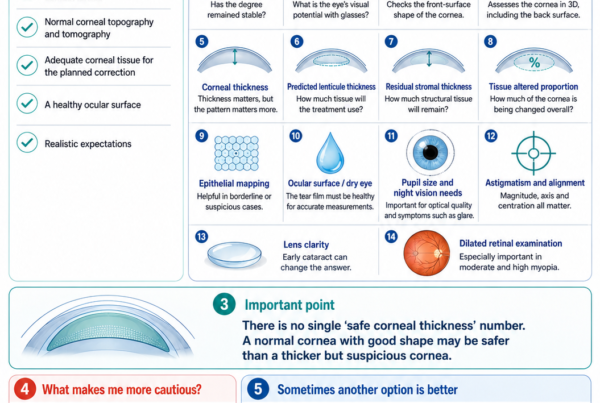
Learn how suitability for SMILE Pro is assessed, including prescription stability, corneal tomography, thickness, residual stroma, dry eye and retinal health.
Article Excerpt
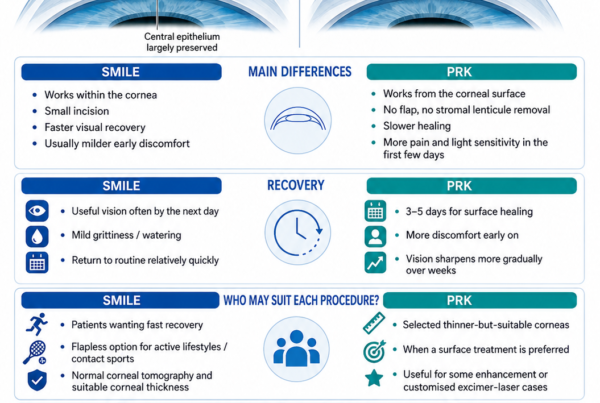
Compare SMILE vs PRK for recovery, pain, dry eye, corneal strength, haze, suitability and visual results—and learn which flapless procedure may suit you.
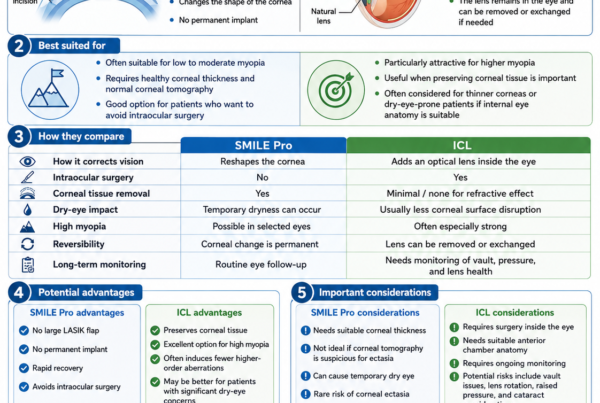
Compare SMILE Pro vs ICL for myopia, visual quality, dry eye, recovery and safety—and learn when corneal laser surgery or an implantable lens may be better.
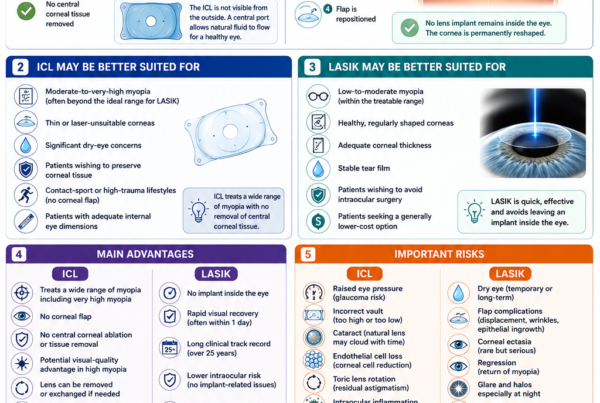
Compare ICL vs LASIK for myopia and astigmatism. Learn how they differ in suitability, visual quality, dry eye, risks, recovery and long-term care.
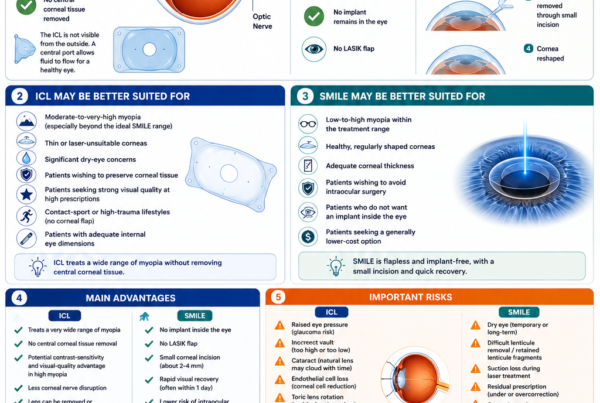
Compare ICL vs SMILE for myopia and astigmatism. Learn how they differ in suitability, visual quality, dry eye, risks, recovery and long-term care.
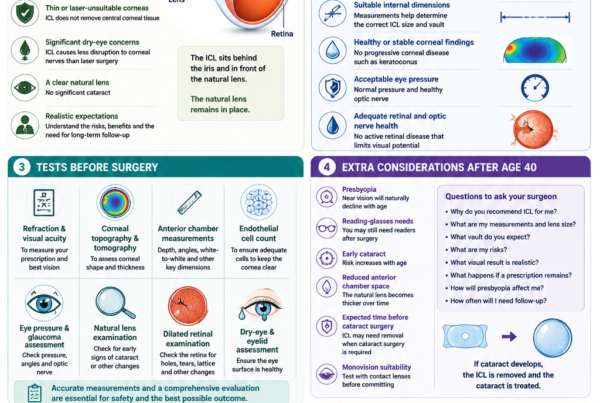
Find out who is suitable for ICL surgery, including the ideal prescription, age, corneal and internal eye requirements, and reasons someone may not qualify.
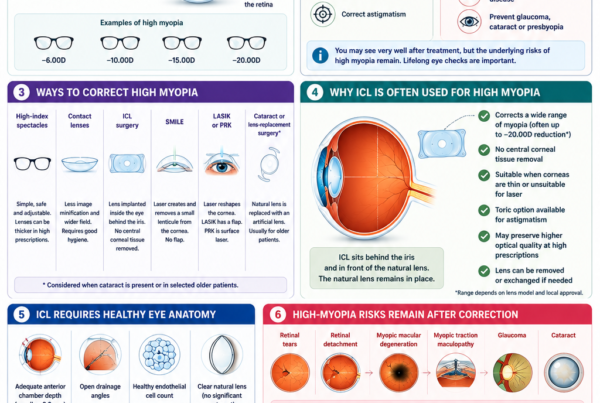
High myopia can be corrected with glasses, contact lenses, ICL or laser surgery, but the elongated eye and retinal risks remain. Learn which option may be suitable.
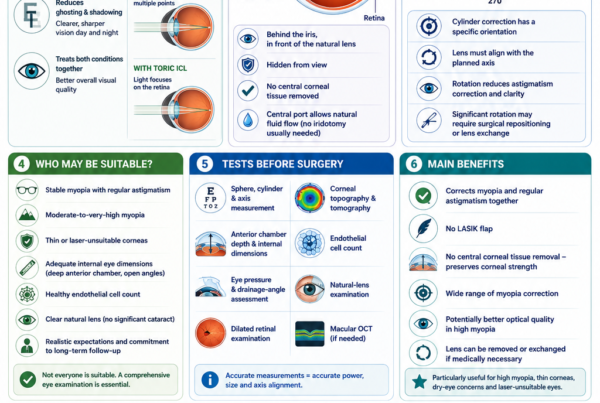
Toric ICL surgery corrects myopia and astigmatism with a lens implanted behind the iris. Learn how it works, who is suitable, rotation risks and recovery.
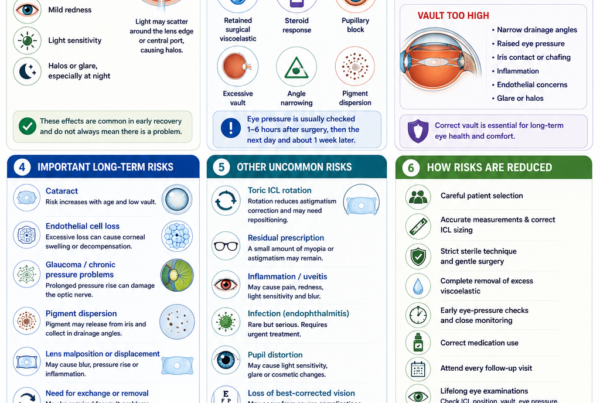
Learn about ICL surgery risks, including eye-pressure changes, cataract, incorrect vault, endothelial cell loss, halos, infection and additional surgery.
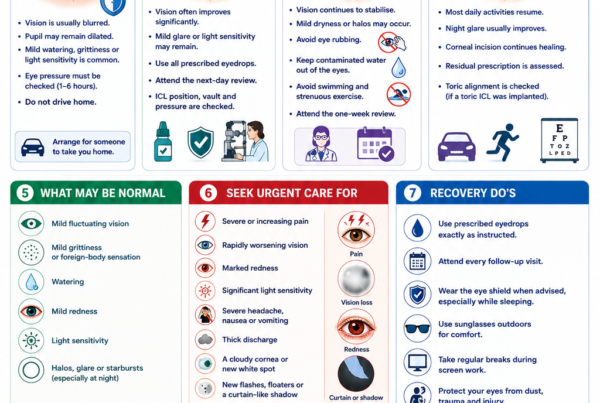
Learn what to expect after ICL surgery, including the recovery timeline, eyedrops, driving, work, exercise, swimming and symptoms needing urgent care.
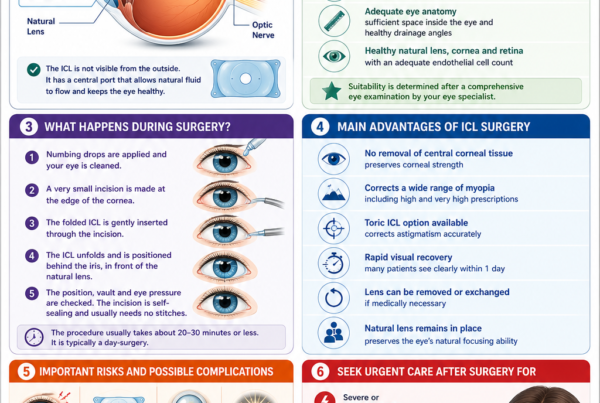
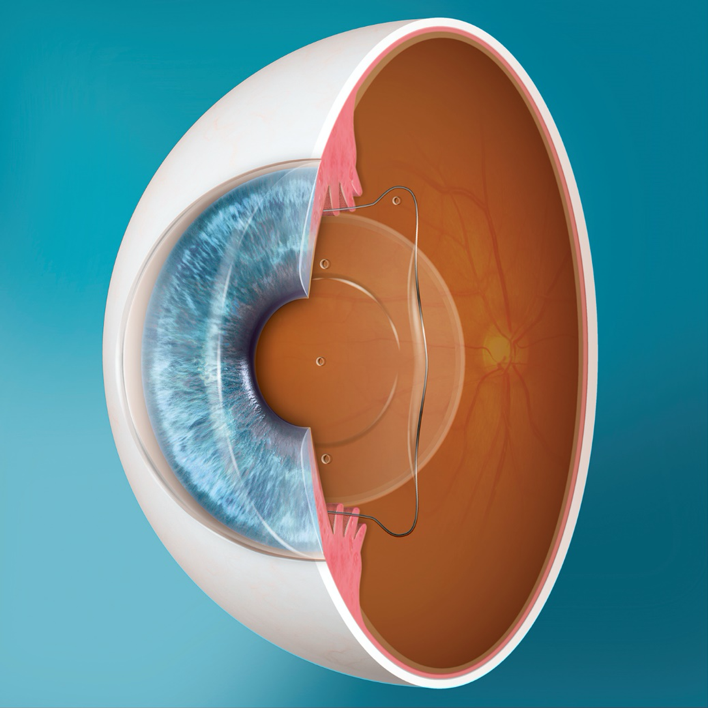
ICL surgery corrects myopia and astigmatism by implanting a lens inside the eye. Learn how it works, who is suitable, its benefits, risks and recovery.
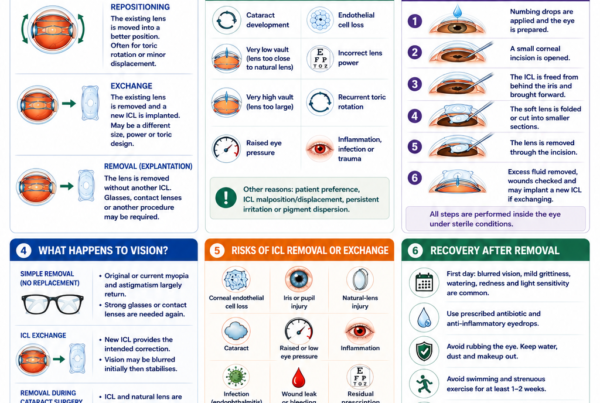
An ICL can usually be removed, and uncomplicated removal largely restores the eye to its preoperative state. Learn about exchange, risks and recovery.
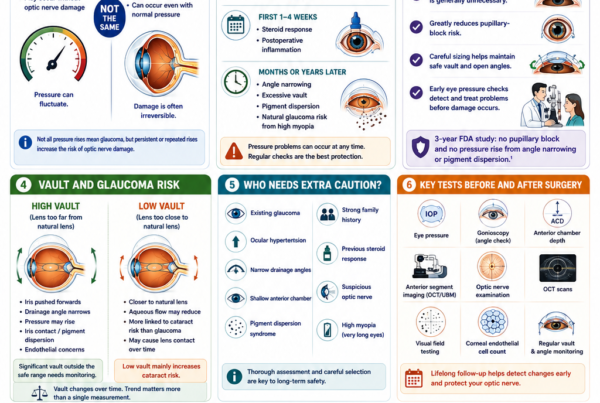
ICL does not commonly cause glaucoma, but eye pressure can rise after surgery. Learn about steroid response, high vault, angle narrowing and monitoring.
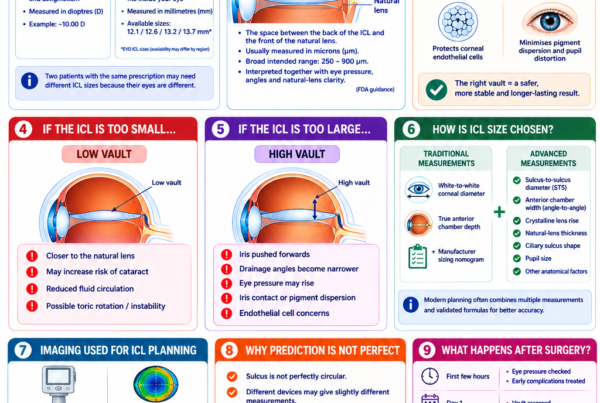
Learn how ICL size is chosen using white-to-white, anterior chamber depth, OCT and sulcus measurements, and why correct vault is important.
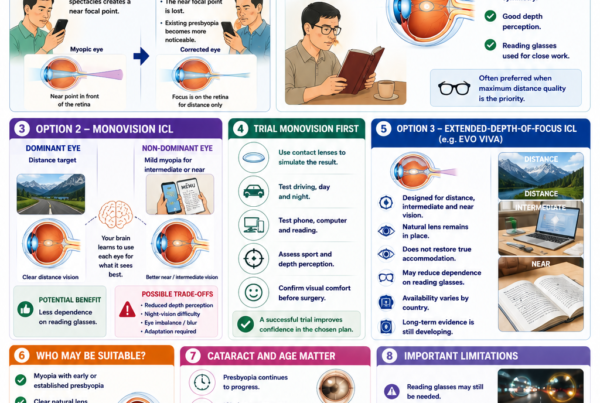
Standard ICL does not cure presbyopia, but monovision or an extended-depth-of-focus ICL may reduce the need for reading glasses.