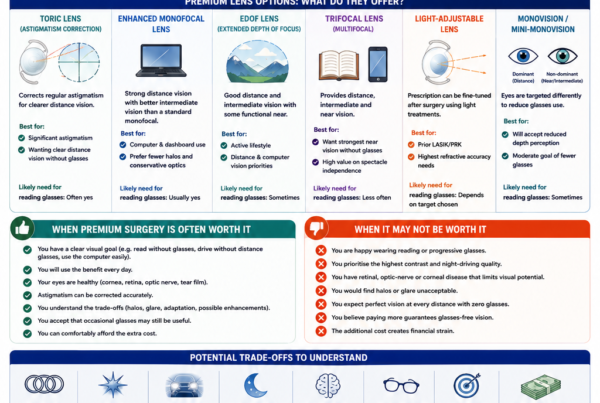
Learn whether premium cataract surgery is worth the additional cost by comparing toric, enhanced monofocal, EDOF, trifocal and adjustable lenses.
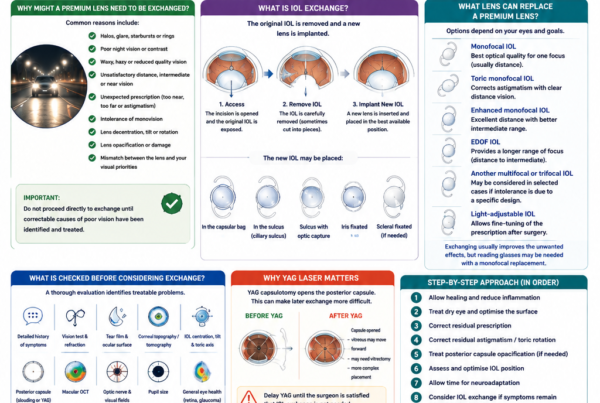
Learn when multifocal, trifocal and EDOF lenses can be exchanged, why YAG laser matters, the risks involved and which replacement lenses may be used.
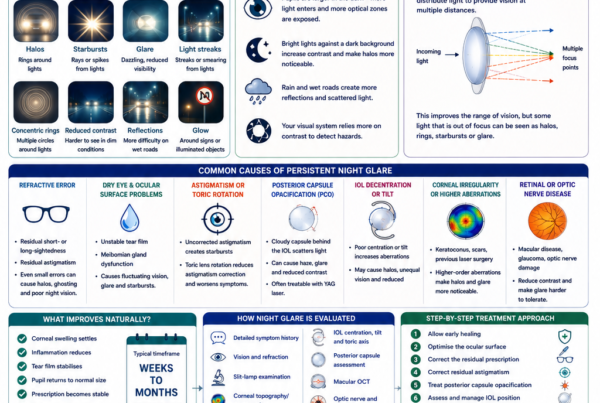
Learn why multifocal, trifocal and EDOF lenses can cause night glare, halos and starbursts, what may improve naturally and when treatment is needed.
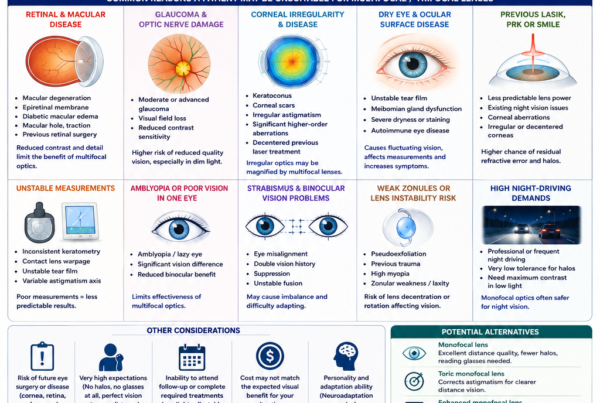
Learn why retinal disease, glaucoma, dry eye, irregular corneas, previous LASIK, night-driving needs and unrealistic expectations may affect premium-lens suitability.
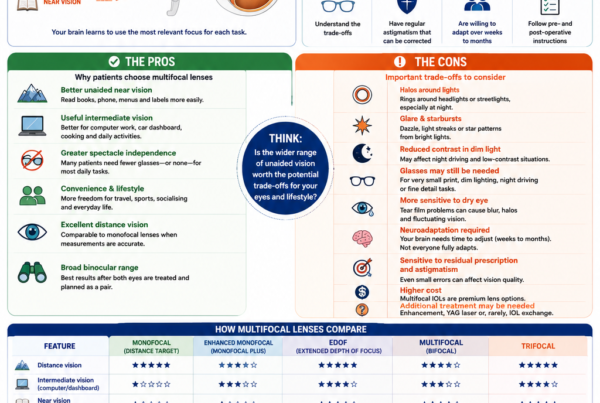
Learn the pros and cons of multifocal lenses for cataract surgery, including reading vision, spectacle independence, halos, glare, contrast and night driving.
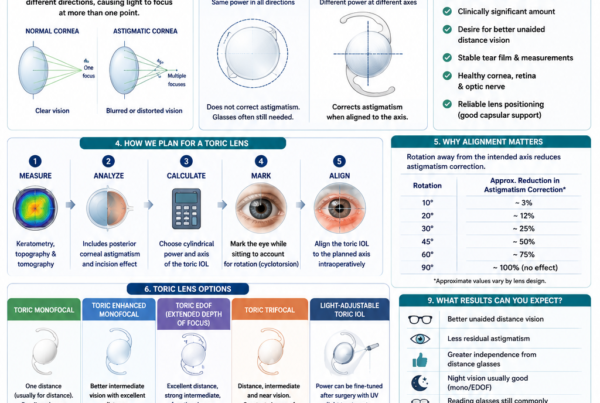
Learn how toric lenses correct astigmatism during cataract surgery, who is suitable, how alignment works and whether glasses may still be needed.
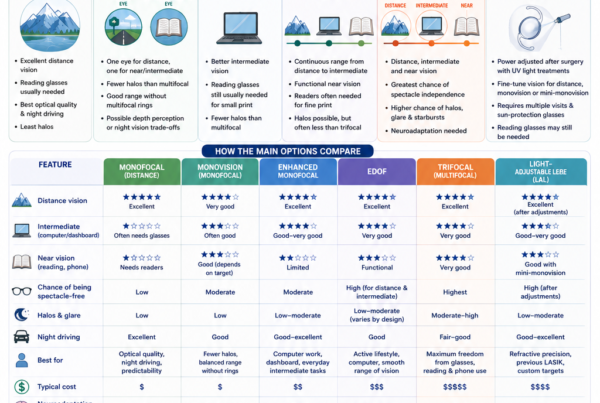
Learn whether cataract surgery can make you spectacle-free and how monovision, trifocal, EDOF, enhanced monofocal and toric lenses affect glasses use.
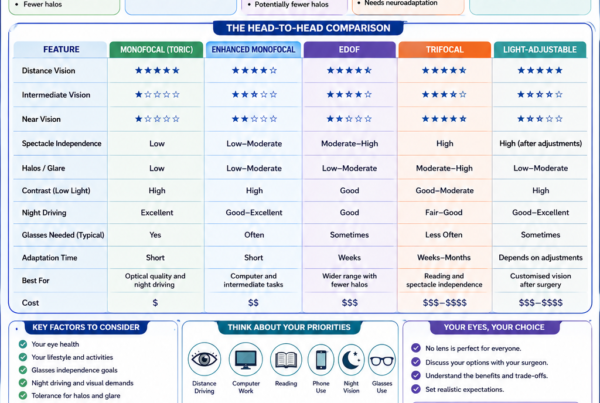
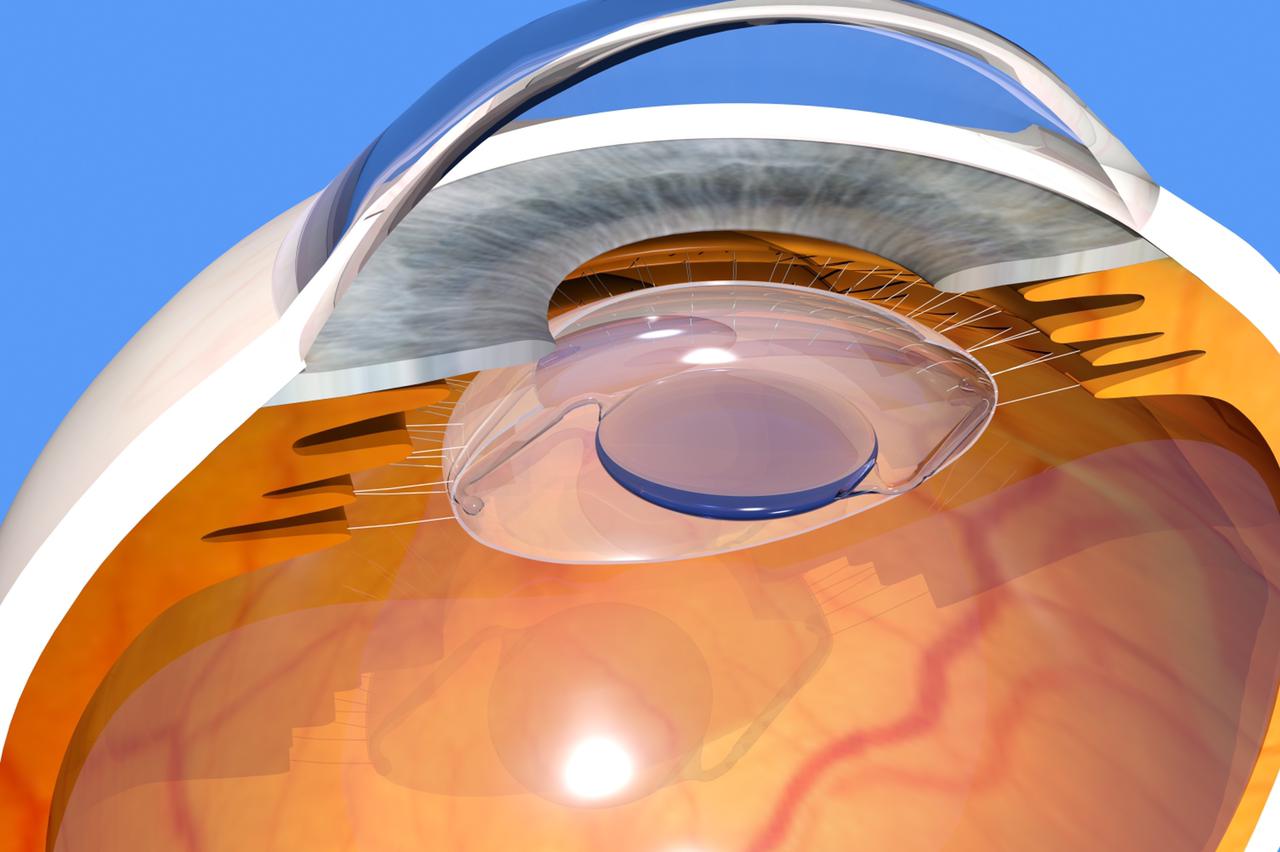
Compare premium cataract lenses, including trifocal, EDOF, enhanced monofocal, toric and light-adjustable IOLs, to find which best suits your eyes and lifestyle.
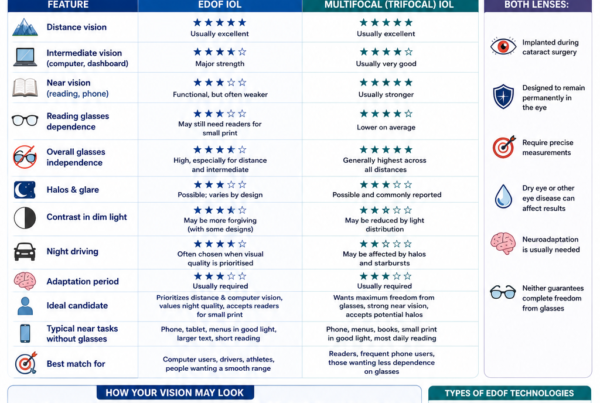
Compare EDOF and multifocal IOLs for cataract surgery, including distance, computer and reading vision, glasses use, halos, contrast and night driving.
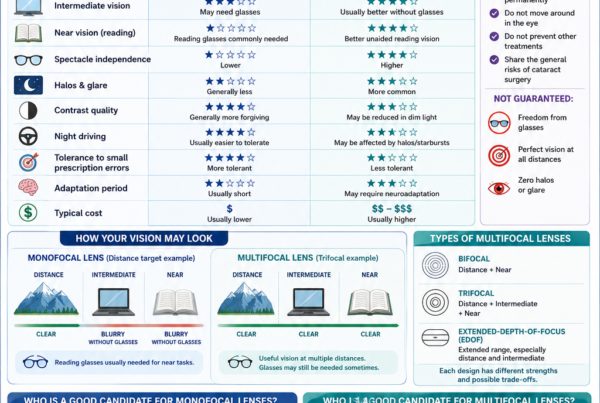
Compare monofocal and multifocal lenses for cataract surgery, including vision range, glasses use, halos, night driving, contrast and suitability.
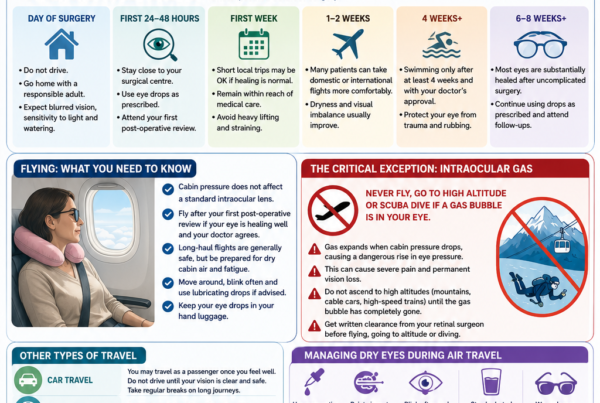
Learn when you can fly and travel after cataract surgery, how to manage eye drops, cabin dryness and luggage, and why flying with an eye…
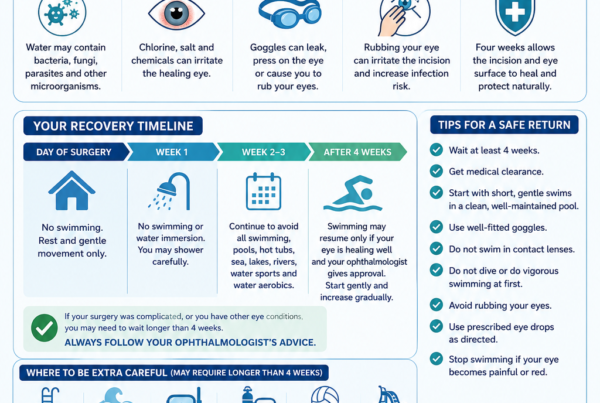
Learn when you can swim after cataract surgery, whether goggles make swimming safe and when to return to pools, the sea, hot tubs and water…
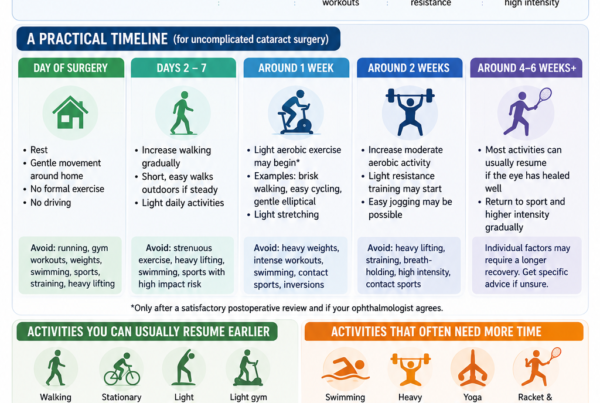
Learn when you can exercise after cataract surgery, including safe timelines for walking, running, gym workouts, weights, swimming, yoga and racket sports.
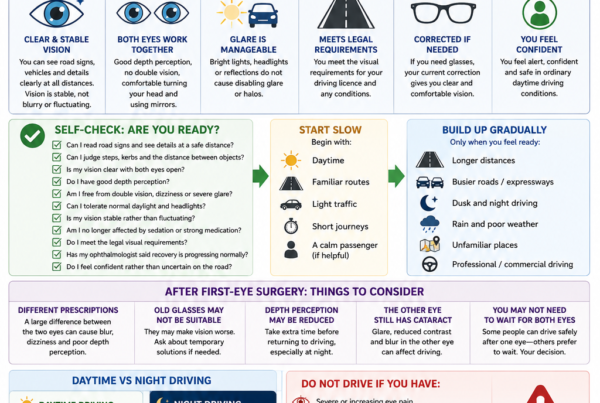
Learn when you can drive after cataract surgery, how to know your vision is safe, when to avoid night driving and why recovery time differs…
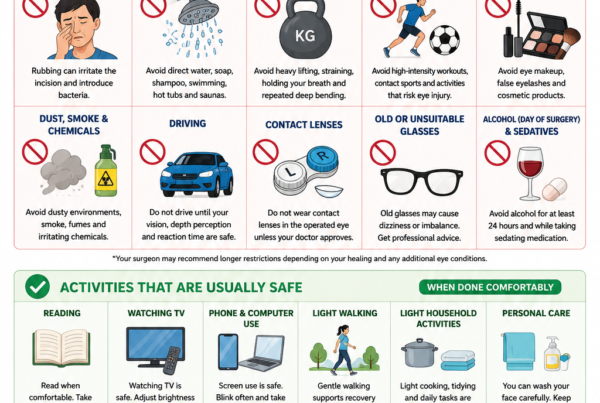
Learn what to avoid after cataract surgery, including eye rubbing, swimming, heavy lifting, exercise, driving, makeup and symptoms needing urgent review.
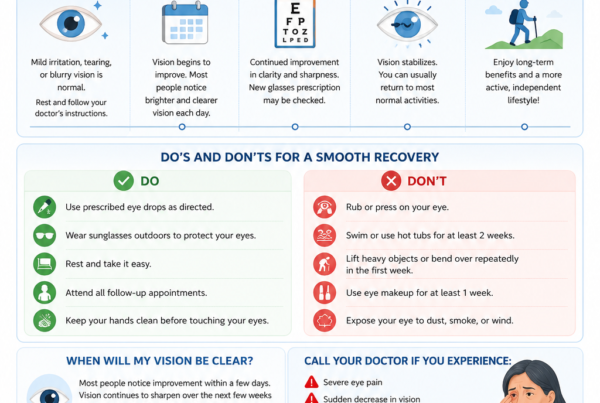
Learn what to expect during recovery after cataract surgery, including the healing timeline, eye drops, activity restrictions, vision changes and warning signs.
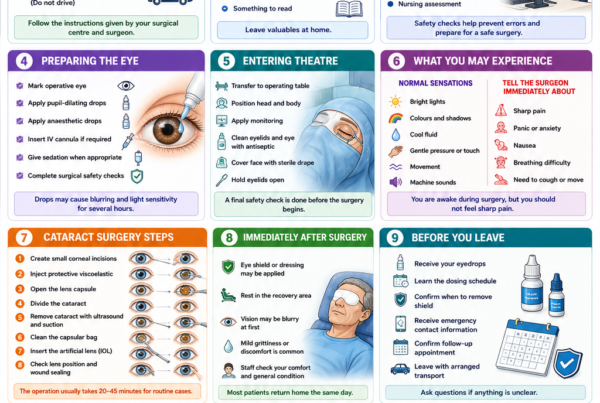
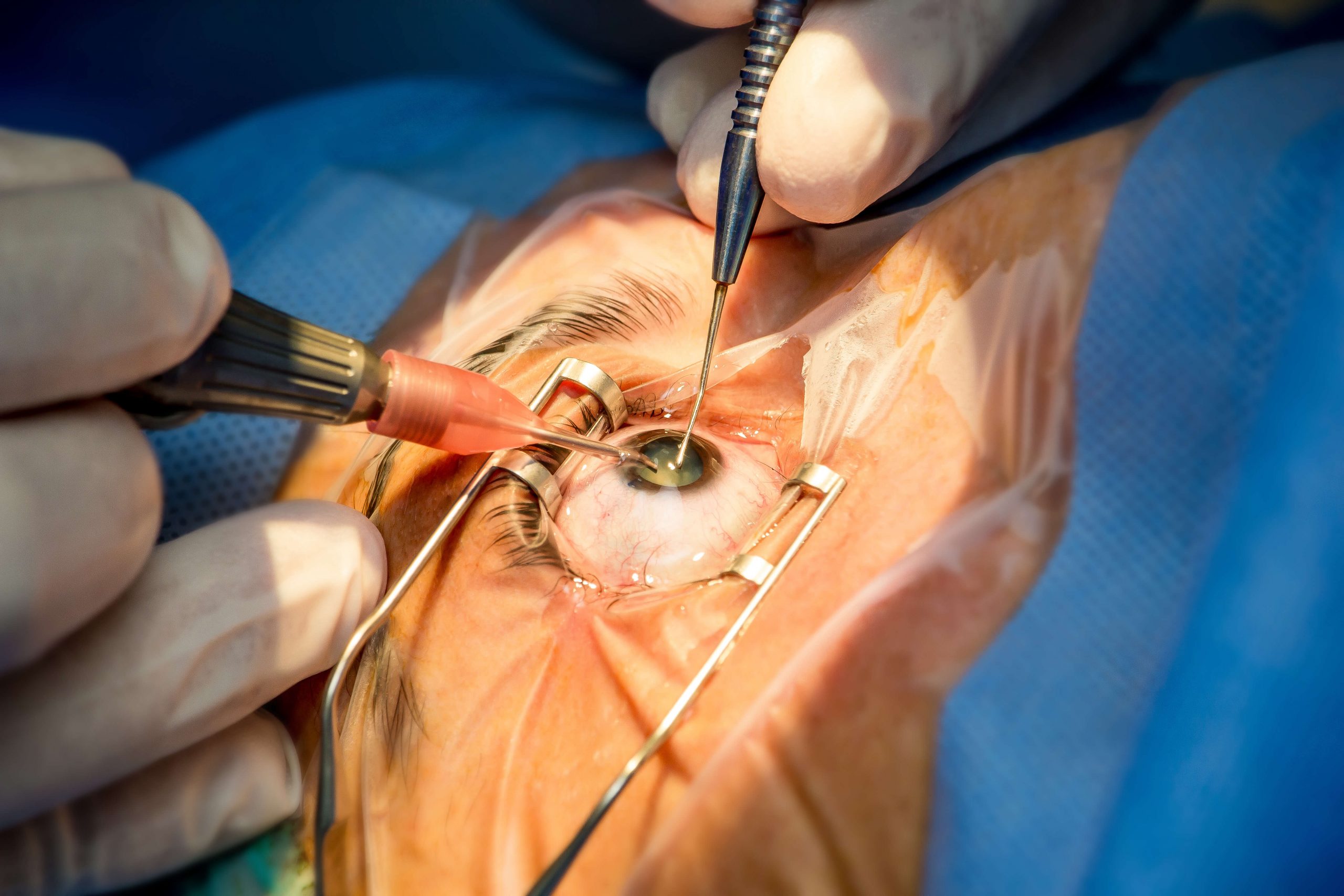
Follow cataract surgery day step by step—from fasting, medication and registration to anaesthesia, lens replacement, recovery and returning home.
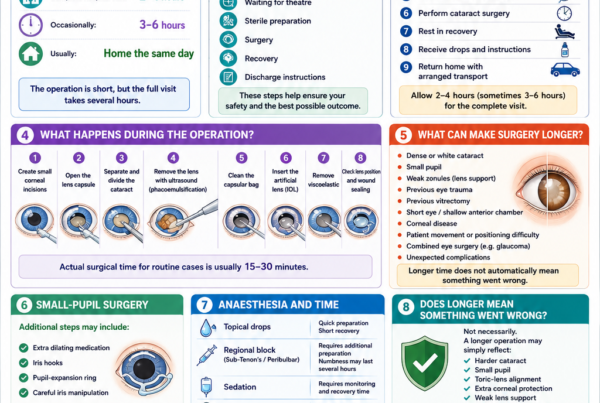
Cataract surgery often takes 15–30 minutes, but the complete hospital visit takes several hours. Learn what affects surgery time, discharge and recovery.
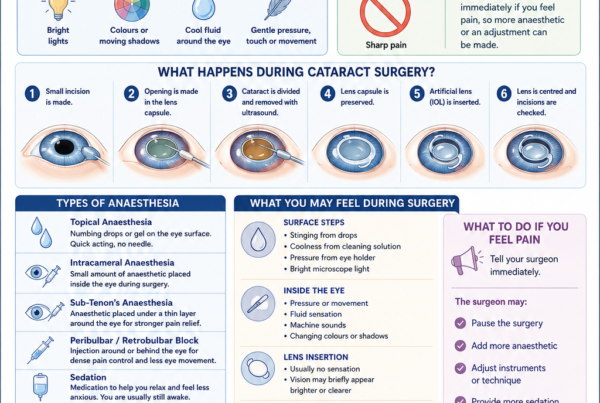
Cataract surgery is usually painless under local anaesthesia. Learn what you may feel during surgery, anaesthesia options, normal discomfort and urgent warning signs.
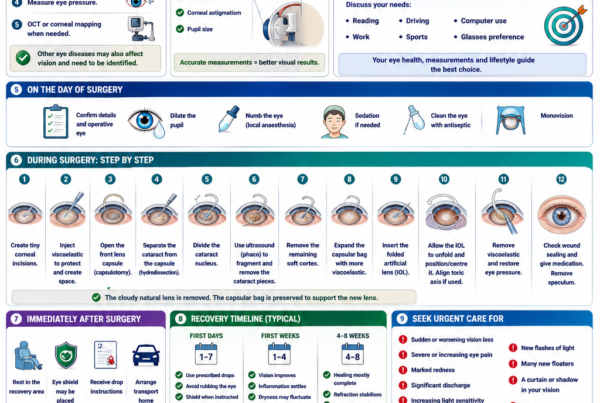
Follow every step of cataract surgery—from eye measurements and IOL selection to lens removal, recovery, eyedrops and warning symptoms after surgery.
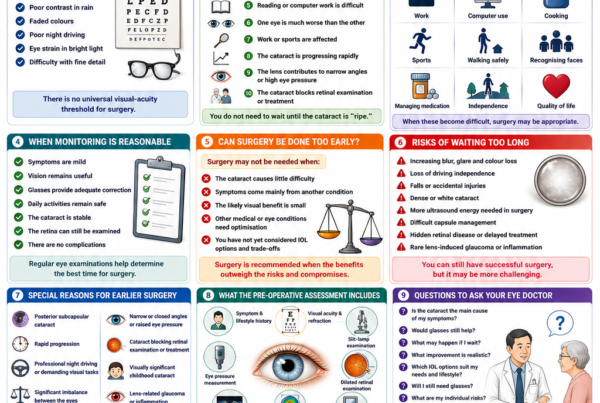
Cataract surgery should be considered when blur, glare, poor night vision or reduced contrast affects daily life. Learn why cataracts do not need to become…
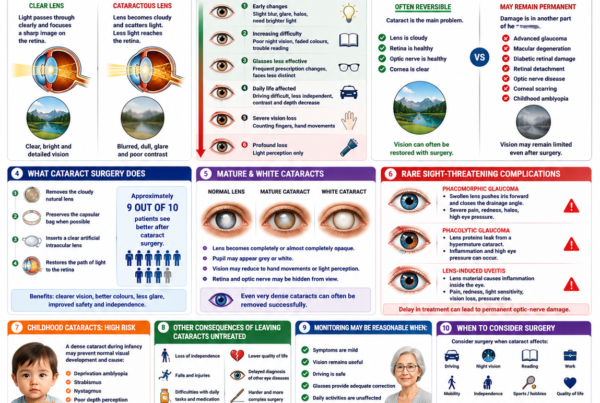
Cataracts can cause severe vision loss and blindness, but cataract-related blindness is often reversible with surgery if the retina and optic nerve remain healthy.
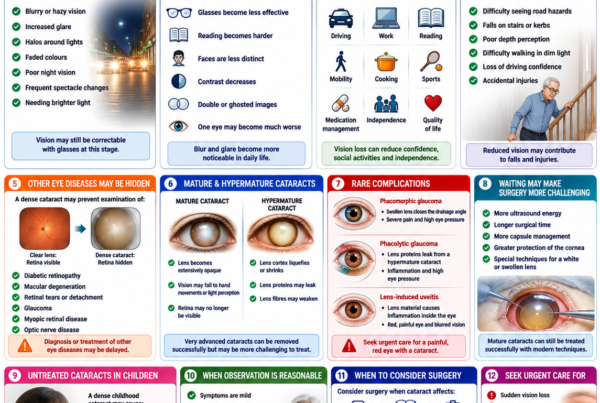
Untreated cataracts may cause worsening blur, glare, poor night vision, falls and loss of independence. Advanced cataracts can rarely cause glaucoma or inflammation.
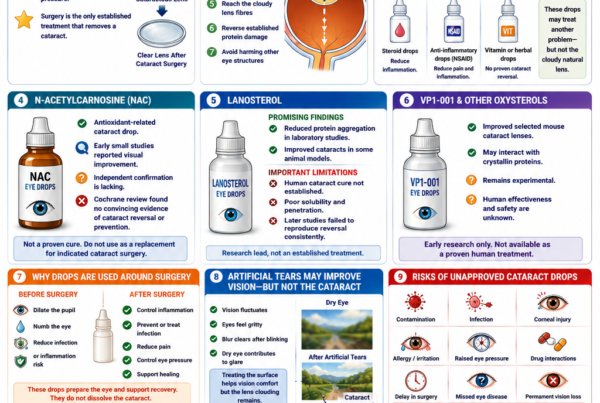
No proven eye drop cures ordinary cataracts. Learn about lanosterol, N-acetylcarnosine, experimental cataract drops and why surgery remains the established treatment.
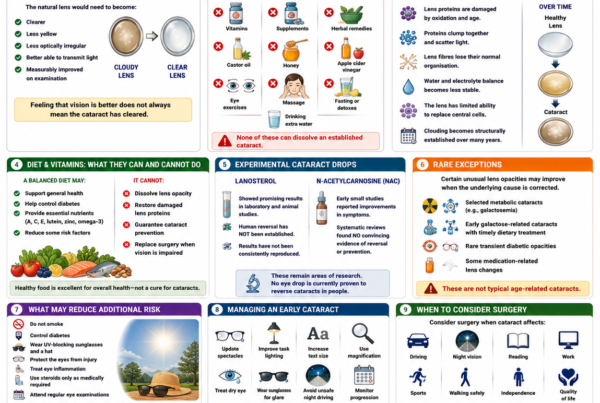
No natural remedy has been proven to reverse cataracts. Learn the evidence on vitamins, diet, castor oil, lanosterol and cataract eye drops.
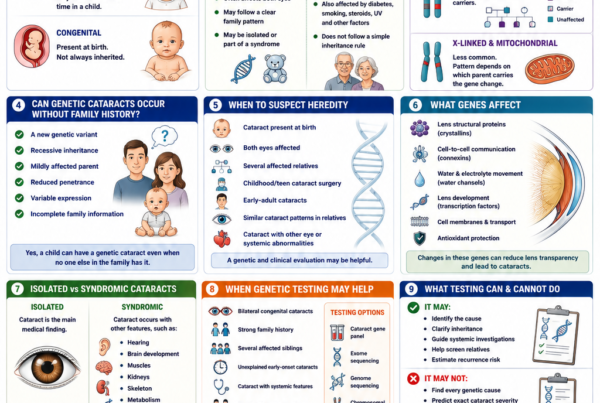
Cataracts can run in families. Learn how congenital cataracts are inherited, how genetics affects age-related cataracts and when genetic testing may help.
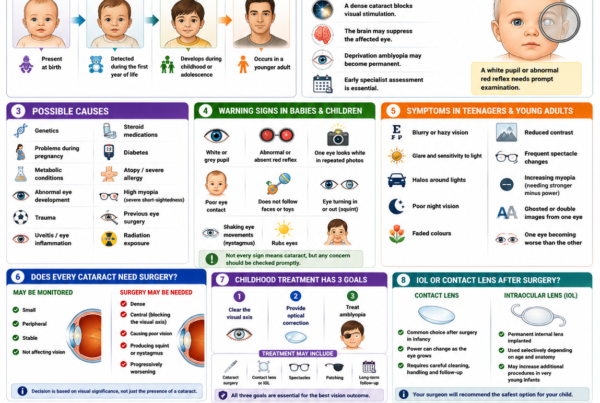
Babies, children and young adults can develop cataracts from genetic conditions, trauma, steroids, diabetes or inflammation. Learn the warning signs and treatments.
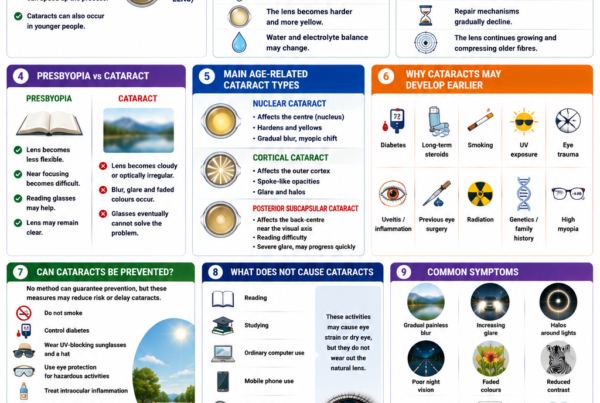
Most cataracts are age-related, but diabetes, steroids, smoking, UV exposure, trauma and inflammation may cause them earlier. Learn why the lens becomes cloudy.
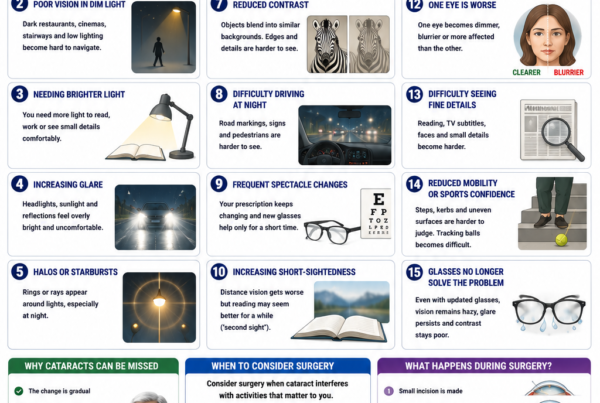
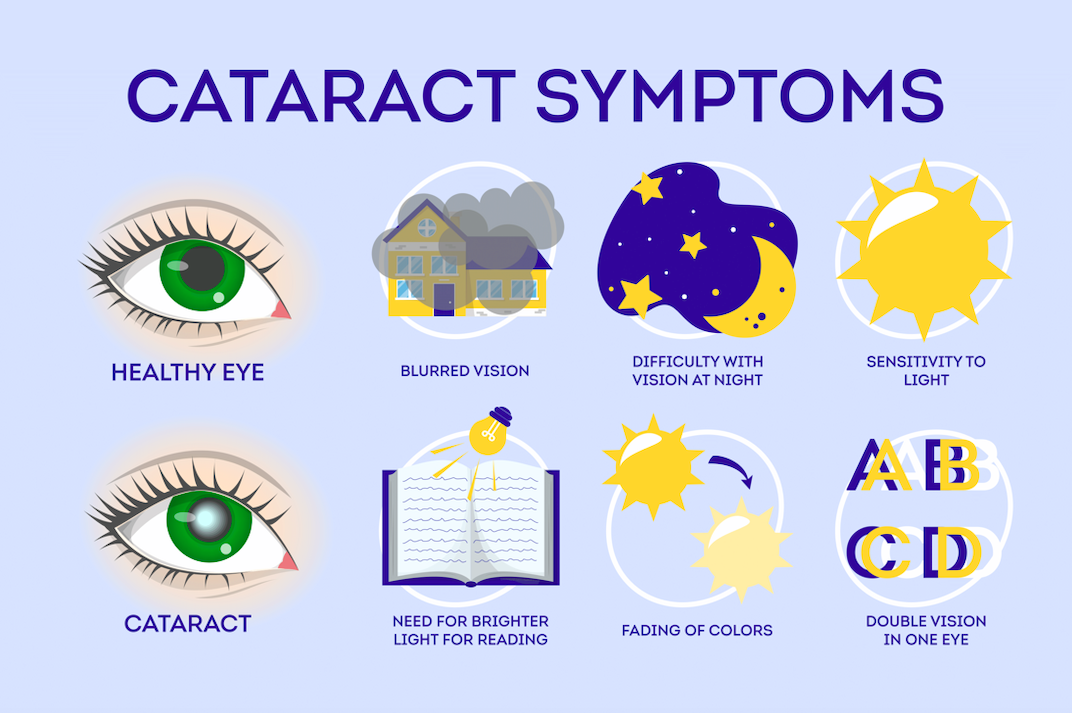
Learn 15 possible signs of cataracts, including blurry vision, glare, halos, poor night driving, faded colours, frequent prescription changes and second sight.
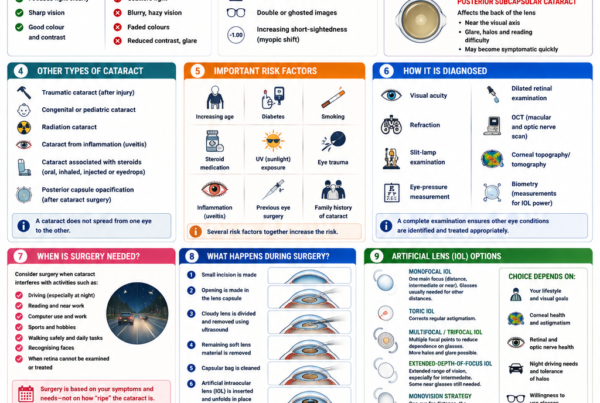
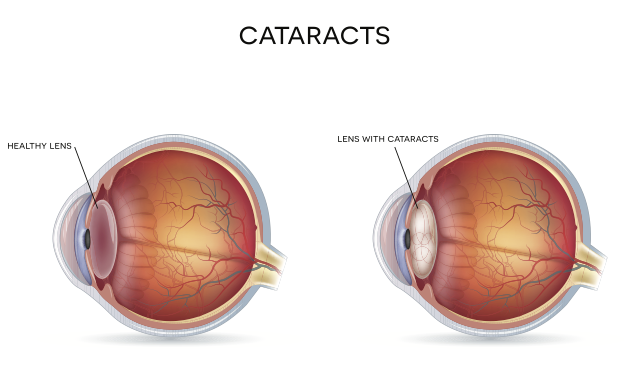
Learn what a cataract is, its symptoms, causes and different types, when surgery is needed and how artificial lens options affect vision after treatment.

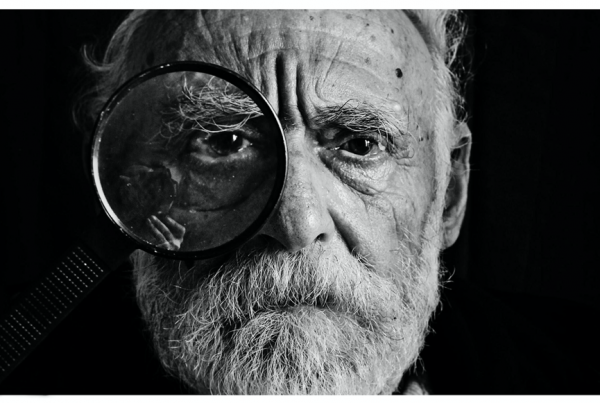
Author: Dr Val Phua MBBS, MMed (Ophth), FRCOphth, FAMS Photo by: Naja Bertolt Jensen Cataracts are a leading cause of reversible blindness in the world…
It usually begins at about 40 years old. The distance at which you hold your favourite book or magazine gets progressively further and further away…

Cataracts are a leading cause of reversible blindness in the world and many undergo surgery each day to have their cataracts removed and sight restored.

Modern day cataract surgery is a highly successful procedure to restore sight with a favourable outcome in 98% of patients. What is at stake for…

Cataracts are a leading cause of treatable blindness in the world and is commonly correlated with age. With life expectancy increasing in tandem with modern…

Multifocal intraocular lenses seem to be the perfect answer for correcting vision after cataract surgery. Not only can it address the common refractive errors of…