Author: Dr Val Phua
Estimated reading time: 18 minutes
Dry eye is one of the most common symptoms experienced after LASIK.
Patients may notice:
- Grittiness or a sandy sensation
- Burning or stinging
- Fluctuating or intermittently blurred vision
- Eye fatigue
- Light sensitivity
- Redness
- Watering
- Discomfort in air-conditioning
- Difficulty using screens for long periods
- Contact lens intolerance
- Vision that becomes clearer immediately after blinking
For most patients, these symptoms are temporary and improve as the corneal surface, tear film and sensory nerves recover.
However, dry eye after LASIK should not be dismissed as an unavoidable inconvenience. Significant dryness can interfere with visual recovery, reduce quality of vision and, in a smaller group of patients, persist for many months or become a long-term ocular-surface problem.
The FDA-supported Patient-Reported Outcomes With LASIK studies found that up to 28% of participants who reported no dry-eye symptoms before LASIK reported some dry-eye symptoms three months after surgery. Overall satisfaction nevertheless remained high, with more than 95% of participants satisfied with their vision.
The central message is:
Temporary dryness is common after LASIK. Persistent severe dryness is less common, but pre-existing ocular-surface disease, deeper treatment and abnormal corneal nerve recovery can increase the risk.
Why Does LASIK Cause Dry Eyes?
The tear film is regulated by a connected system involving:
- The corneal nerves
- Lacrimal glands
- Eyelid blinking
- Meibomian oil glands
- Conjunctival goblet cells
- The corneal and conjunctival epithelium
- Sensory pathways between the eye and brain
This is sometimes called the lacrimal functional unit.
When the corneal surface senses dryness or irritation, sensory nerves normally send signals that stimulate:
- Tear secretion
- Blinking
- Meibomian oil release
- Ocular-surface protection
LASIK temporarily disrupts this feedback system.
Corneal Nerves Are Cut During Flap Creation
The front of the cornea contains a dense network of sensory nerves.
During LASIK:
- A corneal flap is created.
- Many nerves entering through the flap area are cut.
- The excimer laser removes additional stromal tissue beneath the flap.
- Corneal sensation is temporarily reduced.
Reduced corneal sensation means that the eye may not signal the lacrimal glands and eyelids as effectively, resulting in reduced tear production and less effective blinking.
Studies examining corneal nerves after LASIK have shown that reduced nerve density and altered nerve structure are associated with postoperative dry-eye symptoms. Recovery occurs gradually, but nerve architecture may remain measurably different from that of an unoperated cornea for years.
Tear Production May Decrease
Reduced sensory input from the cornea can reduce reflex tear secretion.
Prospective studies have documented postoperative changes in:
- Schirmer tear production
- Tear-film break-up time
- Basal tear secretion
- Corneal sensation
- Ocular-surface staining
Patients with lower tear production before surgery appear more likely to experience troublesome dryness afterwards.
Blinking May Become Less Effective
Corneal sensation contributes to normal spontaneous blinking.
After LASIK, reduced sensation may lead to:
- Less frequent blinking
- Incomplete blinking
- Poorer tear distribution
- More tear evaporation
- Less effective meibomian gland expression
This becomes particularly noticeable during prolonged phone or computer use, when blinking is already reduced.
The Meibomian Oil Layer May Be Inadequate
The meibomian glands produce the oily outer layer of the tear film.
This layer slows tear evaporation.
Many patients seeking LASIK already have undiagnosed:
- Meibomian gland dysfunction
- Thickened meibomian secretions
- Blocked gland openings
- Eyelid-margin inflammation
- Incomplete blinking
LASIK may not directly create these underlying gland abnormalities, but postoperative nerve disruption, reduced blinking and increased screen use can make them more symptomatic.
This produces evaporative dry eye, in which tears may be present but evaporate too quickly.
Ocular-Surface Inflammation Can Develop
An unstable tear film increases:
- Tear concentration
- Epithelial stress
- Surface inflammation
- Corneal staining
- Nerve irritation
Inflammation can further reduce tear production and destabilise the ocular surface, creating a self-perpetuating cycle.
This is why some patients require more than artificial tears alone.
Eyedrop Preservatives May Aggravate the Surface
Antibiotic and steroid drops are normally required during early LASIK recovery.
Preserved medication used frequently may temporarily irritate a sensitive ocular surface.
For patients requiring frequent lubrication, preservative-free artificial tears are often preferred to reduce cumulative preservative exposure.
What Does Dry Eye After LASIK Feel Like?
Symptoms vary considerably between patients.
Common symptoms include:
- Dryness
- Grittiness
- Burning
- Stinging
- A scratchy sensation
- Intermittent blur
- Eye fatigue
- Redness
- Light sensitivity
- Wind sensitivity
- Discomfort under fans or air-conditioning
- Difficulty keeping the eyes open comfortably
- Excessive tearing
- Stringy mucus
- Contact lens intolerance
- Pain
FDA patient information lists scratchiness, burning, stinging, excessive tearing, discharge, pain and blurred vision among possible dry-eye symptoms after LASIK.
Why Can Dry Eyes Cause Watery Eyes?
Watering does not necessarily mean that the eye is adequately lubricated.
When the corneal surface becomes irritated, the lacrimal gland may produce a sudden rush of reflex tears.
These tears are often:
- Watery
- Short-lived
- Poorly retained
- Inadequate in oil and mucin components
They may spill over the eyelids without providing a stable optical surface.
A patient can therefore have watery eyes and dry-eye disease at the same time.
Why Does Vision Fluctuate After LASIK?
The tear film is the first optical surface through which light enters the eye.
A smooth, stable tear film helps create clear vision.
When the tear film breaks up:
- The corneal optical surface becomes irregular
- Light scatters
- Letters may appear blurred or shadowed
- Contrast decreases
- Vision may fluctuate between blinks
A typical clue is:
Vision becomes clearer immediately after blinking or applying lubricant, then gradually becomes blurry again.
This pattern is more suggestive of tear-film instability than true LASIK regression.
Why Is Vision Often Worse With Screens?
Screen concentration reduces both the frequency and completeness of blinking.
Dry-eye symptoms may therefore worsen during:
- Computer work
- Phone use
- Gaming
- Reading
- Detailed near work
- Long video calls
Patients may notice:
- Increasing blur later in the day
- Difficulty sustaining focus
- Burning
- Heavy eyelids
- Headache
- A need to blink repeatedly to clear the vision
The problem is often amplified by air-conditioning, fans and low environmental humidity.
How Common Is Dry Eye After LASIK?
Reported rates differ considerably because studies use different:
- Symptom questionnaires
- Clinical definitions
- Follow-up periods
- Surgical techniques
- Patient populations
- Dry-eye tests
Transient ocular-surface changes are common.
The FDA PROWL studies found that up to 28% of patients without preoperative dry-eye symptoms developed symptoms by three months.
A prospective study found that dry eye developed commonly after LASIK even among patients without a previous dry-eye history, with higher preoperative myopia and deeper laser treatment associated with increased risk.
However, persistent clinically significant dry eye is much less common than short-term symptoms. In a prospective study comparing PRK and LASIK, chronic dry eye was uncommon, and preoperative tear-film abnormalities helped identify patients at greater risk.
Long-term estimates should be interpreted carefully. Studies that actively recruit patients with persistent complaints or examine selected post-LASIK populations may report much higher symptom rates than prospective studies following an unselected surgical group.
How Long Do Dry Eyes Last After LASIK?
There is no single recovery time.
A practical timeline is:
The First Few Days
Common experiences include:
- Burning
- Watering
- Grittiness
- Mild light sensitivity
- Fluctuating vision
These symptoms are partly related to the immediate surgical surface disturbance and usually improve quickly.
The First Two to Four Weeks
Dryness may become more noticeable during:
- Screen use
- Driving
- Air-conditioned work
- Late evenings
Frequent lubricating drops may be required.
One to Three Months
Corneal sensation remains reduced in many patients.
Tear production, blinking and surface stability gradually improve.
Dry-eye symptoms may still fluctuate, particularly in patients with:
- Higher myopia
- Deep ablation
- Pre-existing meibomian gland dysfunction
- Low preoperative tear production
Three to Six Months
Many patients notice significant improvement during this period.
Corneal sensory recovery and tear-film regulation continue, although recovery is not identical in every eye.
Prospective studies have shown that symptoms and corneal sensory function commonly improve over the first six months, although structural nerve regeneration may continue beyond this period.
Six to Twelve Months
Most uncomplicated cases should be substantially improved.
Symptoms persisting beyond six to twelve months require a more detailed assessment for:
- Meibomian gland dysfunction
- Aqueous tear deficiency
- Ocular-surface inflammation
- Exposure
- Reduced corneal sensation
- Neuropathic corneal pain
- Another underlying eye or systemic condition
Can Dry Eye Become Permanent After LASIK?
Persistent dry-eye symptoms can occur, but not every symptom continuing after LASIK is caused solely by irreversible surgical damage.
Long-term problems may reflect a combination of:
- Pre-existing dry-eye disease
- Meibomian gland dysfunction
- Reduced tear production
- Incomplete blinking
- Ageing
- Hormonal change
- Medication
- Autoimmune disease
- Screen exposure
- Abnormal nerve recovery
- Neuropathic pain
A prospective study found that chronic dry eye after LASIK was uncommon, while preoperative tear-film and ocular-surface abnormalities increased the likelihood of persistent disease.
The phrase “permanent dry eye” should therefore be used carefully.
Some patients have chronic treatable ocular-surface disease. Others have persistent nerve-related symptoms even when conventional dry-eye tests appear relatively normal.
Who Is More Likely to Develop Dry Eye After LASIK?
Patients With Dry Eye Before Surgery
This is one of the most important risk factors.
A patient may have dry eye even without severe symptoms.
Preoperative signs may include:
- Short tear break-up time
- Corneal staining
- Reduced tear production
- Blocked meibomian glands
- Eyelid-margin inflammation
- Fluctuating refraction
- Contact lens intolerance
Existing dry-eye disease should be treated before final LASIK measurements and surgery.
Patients With Meibomian Gland Dysfunction
Blocked or poorly functioning oil glands allow tears to evaporate rapidly.
Possible clues include:
- Eyelid-margin redness
- Foamy tears
- Thickened gland secretions
- Recurrent styes
- Heavy eyelids
- Symptoms worse with screens
- Temporary relief after warm compresses
Preoperative treatment may improve both comfort and measurement accuracy.
Patients With Higher Myopia or Deeper Ablation
Higher myopic corrections generally require deeper tissue removal.
A prospective study found that the risk of post-LASIK dry eye correlated with the degree of preoperative myopia and depth of laser treatment.
This may reflect greater stromal nerve disruption and a larger biological treatment effect.
Patients With Low Tear Production
Patients with reduced Schirmer measurements before surgery may have less reserve when reflex tearing decreases after LASIK.
One study found that patients with preoperative tear-flow abnormalities were particularly likely to develop postoperative symptoms.
Contact Lens-Intolerant Patients
Contact lens intolerance is sometimes a reason patients seek LASIK.
However, intolerance may result from:
- Dry eye
- Allergy
- Meibomian gland dysfunction
- Corneal inflammation
- Reduced tear production
Removing contact lenses does not automatically remove the underlying ocular-surface problem.
The reason for intolerance should be identified before surgery.
Patients With Autoimmune Disease
Conditions such as Sjögren syndrome and selected connective-tissue diseases may cause severe aqueous tear deficiency and impaired surface healing.
Active autoimmune disease or significant autoimmune-related ocular-surface disease may make LASIK unsuitable.
Patients Taking Drying Medications
Potentially relevant medicines include some:
- Antihistamines
- Antidepressants
- Acne treatments
- Diuretics
- Anticholinergic medicines
- Hormonal therapies
Medication should not be stopped without discussion with the prescribing doctor.
Patients With Incomplete Eyelid Closure
Poor eyelid closure may expose the cornea during sleep.
Possible causes include:
- Facial nerve weakness
- Thyroid eye disease
- Prominent eyes
- Previous eyelid surgery
- Eyelid laxity
- Sleeping with the eyes partly open
LASIK may worsen symptoms if the underlying exposure is not recognised.
Patients With Heavy Screen Exposure
Frequent screen use does not necessarily make LASIK unsafe, but it can amplify postoperative symptoms through:
- Reduced blink rate
- Incomplete blinking
- Increased tear evaporation
- Prolonged air-conditioned exposure
Women and Hormonal Factors
Dry-eye disease is more common in certain hormonal settings, including pregnancy, breastfeeding and menopause.
LASIK is generally postponed during pregnancy and breastfeeding because both refraction and ocular-surface conditions may be unstable.
How Is Dry Eye Assessed Before LASIK?
A preoperative dry-eye evaluation should involve more than asking whether the patient feels dry.
Symptom History
The doctor may ask about:
- Burning or grittiness
- Fluctuating vision
- Contact lens tolerance
- Screen-related symptoms
- Watering
- Light sensitivity
- Morning or evening variation
- Previous styes
- Autoimmune disease
- Medication
Tear-Film Break-Up Time
Fluorescein dye or a non-invasive imaging method measures how quickly the tear film becomes unstable after blinking.
A short break-up time suggests tear-film instability.
Corneal and Conjunctival Staining
Dyes help reveal damaged or stressed epithelial cells.
Staining may indicate:
- Dryness
- Exposure
- Inflammation
- Contact lens-related damage
- Poor tear-film distribution
Tear Production
A Schirmer test may be used to estimate aqueous tear production.
It is only one part of the assessment and should not be interpreted in isolation.
Meibomian Gland Examination
The eyelid margins and gland secretions are examined for:
- Blockage
- Thickened oil
- Gland dropout
- Telangiectatic vessels
- Inflammation
- Poor expression
Eyelid Closure and Blinking
The doctor assesses:
- Blink completeness
- Eyelid position
- Nocturnal exposure
- Facial nerve function
- Eyelid laxity
Corneal Sensation
Reduced sensation may contribute to:
- Poor reflex tearing
- Reduced blinking
- Neurotrophic epithelial problems
Patients with unexpectedly low sensation require additional caution.
Why Must Dry Eye Be Treated Before LASIK?
An unstable tear film can interfere with:
- Refraction
- Corneal topography
- Corneal tomography
- Wavefront measurements
- Astigmatism assessment
- Treatment planning
Different measurements may produce different prescriptions when the ocular surface is irregular.
Treating the surface first can therefore improve:
- Surgical accuracy
- Visual quality
- Comfort
- Healing
- Patient satisfaction
LASIK should not be treated as the cure for contact lens-related dryness without first evaluating the underlying ocular surface.
Can Severe Dry Eye Make Someone Unsuitable for LASIK?
Yes.
Current FDA documentation warns that LASIK may increase dryness and that severe dryness can delay flap healing or interfere with the ocular surface.
LASIK may be inappropriate when there is:
- Severe aqueous tear deficiency
- Significant Sjögren-related disease
- Persistent corneal staining despite treatment
- Neurotrophic keratopathy
- Exposure keratopathy
- Severe meibomian gland disease that cannot be controlled
- Severe ocular pain
- Unstable refraction and corneal measurements
- Poor epithelial healing
Alternatives may include:
- SMILE
- PRK or TransPRK
- ICL
- Spectacles
- Continued contact lens use with surface treatment
However, these alternatives do not automatically eliminate dryness and may also be unsuitable in severe ocular-surface disease.
Is SMILE Better Than LASIK for Dry Eyes?
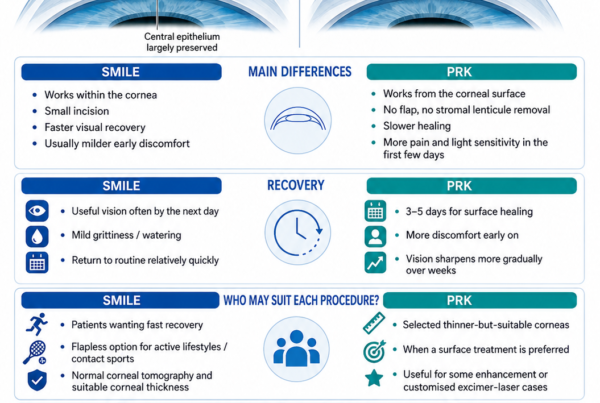
SMILE generally preserves more of the anterior corneal nerve network because it uses a small incision rather than a broad LASIK flap.
Comparative studies have found:
- Better early corneal sensation after SMILE
- Less early ocular-surface disturbance in many patients
- Lower dry-eye severity in some follow-up periods
A prospective comparison found more persistent mild-to-moderate dry eye after LASIK than SMILE at six months.
Long-term nerve imaging has also shown greater nerve preservation after SMILE, although neither LASIK nor SMILE eyes necessarily return completely to unoperated nerve architecture.
SMILE does not prevent dry eye.
It still:
- Cuts corneal nerves
- Creates a stromal interface
- Alters corneal sensation
- Can produce temporary tear-film instability
Severe dry eye may make both procedures unsuitable.
Is PRK Better Than LASIK for Dry Eyes?
PRK avoids a LASIK flap but removes the central epithelium and superficial nerve endings.
PRK may cause:
- Early surface irritation
- Temporary reduced corneal sensation
- Tear-film instability
- Longer epithelial healing
- Frequent postoperative eyedrop use
PRK can therefore cause dry-eye symptoms despite avoiding flap-related nerve transection.
Comparative studies do not support a simple rule that PRK always causes less dryness. The choice depends on the corneal structure, ocular surface and other procedure-specific risks.
How Are Dry Eyes After LASIK Treated?
Treatment should be matched to the underlying mechanism.
A patient with low aqueous tear production may require a different approach from a patient with blocked meibomian glands or neuropathic pain.
Preservative-Free Artificial Tears
These are often the first treatment.
They may improve:
- Grittiness
- Burning
- Fluctuating blur
- Screen tolerance
- Surface staining
Patients requiring frequent drops are often advised to use preservative-free preparations.
Different formulations include:
- Watery lubricants
- Hyaluronic acid-based drops
- Lipid-containing drops
- Gels
- Night-time ointments
The most suitable preparation depends on whether the problem is predominantly aqueous-deficient or evaporative.
Gel or Ointment at Night
Thicker lubricants may help patients with:
- Morning dryness
- Night-time exposure
- Incomplete eyelid closure
- Symptoms on waking
They can blur vision temporarily and are therefore commonly used before sleep.
Screen and Environmental Adjustments
Helpful measures include:
- Taking regular visual breaks
- Blinking deliberately
- Ensuring complete blinks
- Positioning screens slightly below eye level
- Avoiding direct fans
- Reducing strong air-conditioning exposure
- Using a humidifier in very dry environments
- Wearing glasses outdoors in wind
- Maintaining sensible hydration
These measures support treatment but may not be sufficient for moderate or severe disease.
Warm Compresses and Eyelid Hygiene
When meibomian gland dysfunction is present, treatment may include:
- Warm compresses
- Eyelid massage
- Eyelid-margin cleaning
- Treatment of blepharitis or Demodex
- Prescribed medication
The compress must be warm enough to soften gland secretions but not hot enough to injure the skin.
Meibomian Gland Procedures
Selected patients may benefit from:
- Thermal pulsation
- Controlled eyelid heating
- Gland expression
- Intense pulsed light
- Other in-clinic gland treatments
A study evaluating prophylactic thermal pulsation before refractive surgery found improvements in selected ocular-surface signs and tear-film findings. A separate clinical evaluation found improvement in symptoms after thermal pulsation in post-LASIK patients with meibomian gland dysfunction.
These procedures are most helpful when evaporative dry eye and gland obstruction are genuinely present. They do not replace treatment for low aqueous tear production or neuropathic pain.
Anti-inflammatory Eyedrops
Dry-eye disease often involves ocular-surface inflammation.
Depending on the findings, the doctor may prescribe:
- A short supervised course of topical steroid
- Ciclosporin
- Another anti-inflammatory dry-eye medication
Ciclosporin is not an immediate lubricant. It is intended to reduce inflammatory activity and may require sustained treatment before maximum benefit is seen.
Clinical studies in LASIK patients with dry eye have found improved ocular-surface stability or refractive outcomes with topical ciclosporin compared with conventional treatment alone.
Steroid drops should not be used indefinitely without supervision because they may cause:
- Raised eye pressure
- Glaucoma
- Cataract
- Increased infection risk
Punctal Plugs
Tears normally drain through small openings called puncta near the inner eyelids.
Temporary or longer-lasting plugs can reduce tear drainage and keep tears on the eye for longer.
Studies in post-LASIK patients have found that punctal plugs can improve:
- Symptoms
- Tear function
- Functional visual acuity
- Dependence on artificial tears
- Patient satisfaction
Possible limitations include:
- Watering
- Plug displacement
- Irritation
- Infection
- Inflammation
Active eyelid or ocular-surface inflammation is usually treated before permanent tear retention is considered.
Autologous Serum Eyedrops
Autologous serum drops are produced from the patient’s own blood.
They contain biological components found in natural tears and may be considered for:
- Severe surface staining
- Persistent epithelial damage
- Neurotrophic disease
- Refractory post-LASIK dry eye
- Severe symptoms not responding to ordinary lubricants
A clinical study of post-LASIK dry eye found improvement in tear-film break-up time and ocular-surface staining with autologous serum drops.
They require specialised preparation, storage and handling.
Therapeutic or Scleral Contact Lenses
Ordinary soft lenses may worsen dryness in some patients.
However, specialised lenses may occasionally help severe cases.
Bandage Contact Lens
A bandage lens may be used temporarily for:
- Epithelial defects
- Severe surface irritation
- Protection during healing
It requires close monitoring because contact lenses can increase infection risk.
Scleral Lens
A scleral lens vaults over the cornea and holds a fluid reservoir against the surface.
It may help patients with:
- Severe ocular-surface disease
- Irregular astigmatism
- Corneal neuralgia
- Exposure
- Persistent epithelial problems
Scleral lenses require specialist fitting and careful hygiene.
Omega-3 Supplements
Some LASIK-specific studies have reported improvements in tear secretion with omega-3 supplementation.
However, broader randomised dry-eye trials have produced mixed results, and supplements should not be presented as a guaranteed treatment.
Patients taking anticoagulants, those with bleeding disorders or those considering high-dose supplements should discuss this with their doctor.
Should You Drink More Water?
Dehydration can worsen general dryness, but drinking excessive water does not directly repair LASIK-related nerve disruption or meibomian gland dysfunction.
Sensible hydration is supportive rather than a stand-alone treatment.
Can Sleeping With a Fan Cause Problems?
Direct airflow increases tear evaporation.
A fan or air-conditioner blowing towards the face may worsen:
- Morning dryness
- Burning
- Nocturnal exposure
- Fluctuating vision
Redirecting airflow or using eye protection at night may help selected patients.
What Is Neurotrophic Keratopathy?
Corneal nerves do more than provide sensation.
They also support epithelial health and healing.
When corneal sensation is significantly reduced, the cornea may develop:
- Persistent epithelial defects
- Poor healing
- Reduced awareness of injury
- Corneal ulceration
- Infection
- Scarring
A patient with neurotrophic disease may have surprisingly few symptoms despite significant surface damage.
This differs from neuropathic pain, in which symptoms may be severe despite relatively mild clinical signs.
What Is Neuropathic Corneal Pain After LASIK?
A small group of patients develops persistent burning, aching, stabbing pain or severe light sensitivity that appears disproportionate to visible dry-eye findings.
Possible features include:
- Burning pain despite little staining
- Pain triggered by wind or air-conditioning
- Severe light sensitivity
- Pain after minimal touch
- Symptoms that continue despite frequent lubrication
- Pain extending around the eyes or face
- Associated headache or migraine features
- A marked difference between symptoms and clinical signs
A case series described persistent symptoms after LASIK that were better classified as corneal neuralgia than ordinary aqueous-deficient dry eye.
Neuropathic pain may involve:
- Abnormal corneal nerve regeneration
- Peripheral nerve sensitisation
- Central nervous system sensitisation
- A combination of surface disease and altered pain processing
The symptoms are real even when the corneal surface appears relatively normal.
How Is Neuropathic Corneal Pain Diagnosed?
There is no single definitive clinic test.
Assessment may include:
- Detailed symptom history
- Corneal staining
- Tear-film testing
- Corneal sensation
- Eyelid and meibomian gland evaluation
- Review of pain triggers
- Response to topical anaesthetic
- In-vivo confocal microscopy in selected cases
- Screening for migraine or other pain disorders
The aim is to distinguish:
- Active ocular-surface disease
- Neurotrophic disease
- Peripheral neuropathic pain
- Central pain sensitisation
- Mixed disease
How Is Neuropathic Pain Treated?
Management is individualised and may require:
- Aggressive treatment of any surface inflammation
- Preservative-free lubrication
- Autologous serum
- Scleral lenses
- Anti-inflammatory eyedrops
- Systemic nerve-pain medication
- Pain specialist or neurologist involvement
- Migraine management
- Psychological support for chronic-pain coping
Treatment is often more complex than simply adding another artificial tear.
Why Can Symptoms and Test Results Disagree?
Dry-eye symptoms and clinical signs do not always correlate closely.
Possible patterns include:
Severe Signs but Few Symptoms
This may occur with:
- Reduced corneal sensation
- Neurotrophic disease
- Diabetes-related neuropathy
Severe Symptoms but Few Signs
This may occur with:
- Early dry eye
- Intermittent tear-film instability
- Neuropathic corneal pain
- Central sensitisation
A normal Schirmer test does not prove that the patient has no ocular-surface or nerve-related problem.
Can LASIK Dry Eye Cause Permanent Vision Loss?
Ordinary mild dry eye usually causes fluctuating rather than permanent vision loss.
Severe uncontrolled ocular-surface disease can, however, lead to:
- Persistent epithelial damage
- Infection
- Corneal scarring
- Irregular astigmatism
- Reduced best-corrected vision
Prompt evaluation is important when pain, redness or blur worsens instead of improving.
Can Dry Eye Cause LASIK Regression?
Dry eye does not directly regrow the laser-removed corneal tissue.
However, it can:
- Produce variable refraction
- Cause irregular topography
- Mimic recurrent myopia or astigmatism
- Reduce visual quality
- Lead to an inaccurate enhancement plan
The ocular surface should be stabilised before deciding that LASIK has regressed.
Should an Enhancement Be Done While the Eyes Are Dry?
Generally, no.
An enhancement should be postponed until:
- The tear film is stable
- Refraction is repeatable
- Corneal maps are reliable
- Surface staining is controlled
- The residual prescription is confirmed
- Symptoms are shown to arise from refractive error rather than dryness
Additional laser treatment can disrupt more corneal nerves and may worsen the ocular surface.
Can Dry Eyes Be Prevented Before LASIK?
Not every postoperative symptom can be prevented, but risk can be reduced.
Treat Pre-existing Dry Eye
This may involve:
- Lubricants
- Eyelid hygiene
- Meibomian gland treatment
- Anti-inflammatory medication
- Allergy treatment
- Temporary punctal plugs
- Environmental changes
Stop Contact Lenses Before Measurements
Contact lenses can affect:
- Corneal shape
- Tear-film quality
- Eyelid glands
- Surface staining
Measurements should be repeated after the surface and corneal shape have stabilised.
Identify High-Risk Patients
Important factors include:
- Reduced tear production
- Meibomian gland dysfunction
- High myopia
- Deeper planned ablation
- Autoimmune disease
- Exposure
- Severe contact lens intolerance
- Significant pain symptoms
Consider Another Procedure
SMILE may reduce early dry-eye disturbance in suitable myopic patients.
PRK or ICL may be considered for other reasons, but neither is a guaranteed solution for severe ocular-surface disease.
Use Realistic Counselling
Patients should understand that:
- Some dryness is expected
- Drops may be needed frequently
- Vision may fluctuate
- Surface recovery may take months
- Persistent symptoms require treatment
What Should You Avoid During Recovery?
Patients should generally avoid:
- Eye rubbing
- Smoke
- Dust
- Strong direct airflow
- Using unapproved eyedrops
- Allowing bottle tips to touch the eye
- Prolonged uninterrupted screen use
- Stopping medication independently
- Wearing contact lenses without approval
- Ignoring worsening symptoms
When Should You Contact the Clinic?
Arrange an assessment when:
- Dryness is not gradually improving
- Lubricants are needed extremely frequently
- Vision remains highly variable
- Symptoms interfere with sleep or work
- One eye is substantially worse
- Contact lens intolerance persists
- Significant light sensitivity develops
- There is persistent pain despite a relatively normal surface
When Is Urgent Review Needed?
Seek urgent assessment for:
- Severe or increasing pain
- Rapidly worsening vision
- Increasing redness
- Significant discharge
- A white or grey corneal spot
- Marked light sensitivity
- A persistent epithelial defect
- Trauma to the operated eye
- Sudden distortion
- New flashes or many floaters
- A curtain-like shadow
These symptoms may indicate infection, flap complications, inflammation, retinal disease or another condition rather than uncomplicated dry eye.
Frequently Asked Questions About Dry Eyes After LASIK
Are Dry Eyes Normal After LASIK?
Temporary dryness, grittiness and fluctuating vision are common during early recovery.
Symptoms should generally improve with time and treatment.
Does Everyone Get Dry Eyes?
Not everyone experiences noticeable symptoms, but measurable tear-film and corneal-sensation changes are common after surgery.
How Long Will Dry Eyes Last?
Many patients improve over several weeks to months.
Recovery may take six months or longer in patients with pre-existing ocular-surface disease or slower nerve recovery.
Can Dry Eye Last Forever?
Persistent symptoms can occur, but this is less common than temporary dryness.
Long-term symptoms require evaluation for meibomian gland disease, aqueous deficiency, exposure and neuropathic pain.
Why Are My Eyes Watering?
Reflex tearing can occur when the dry corneal surface becomes irritated.
Watery tears may not provide stable lubrication.
Why Does My Vision Clear After Blinking?
Blinking briefly restores a smooth tear film.
This strongly suggests that tear-film instability is contributing to the blur.
Why Is My Vision Worse at Night?
Dryness, larger pupils, residual prescription and optical aberrations may all be more noticeable in dim lighting.
Why Is One Eye Drier?
The two eyes may differ in:
- Tear production
- Meibomian gland function
- Flap dimensions
- Ablation depth
- Eyelid closure
- Corneal nerve recovery
A significant asymmetry should be examined.
Can Artificial Tears Be Used Too Often?
Preservative-free artificial tears can generally be used frequently.
Preserved drops used very often may irritate the surface in some patients.
Which Artificial Tear Is Best?
The best drop depends on whether the condition is predominantly:
- Aqueous-deficient
- Evaporative
- Inflammatory
- Exposure-related
- Mixed
A lipid-containing drop may suit evaporative disease, while a gel may provide longer-lasting relief for aqueous deficiency.
Do Warm Compresses Help?
They may help when blocked meibomian glands are contributing to tear evaporation.
They are less useful when the main problem is severe aqueous tear deficiency or neuropathic pain.
Do Punctal Plugs Help?
They can help selected patients by reducing tear drainage.
They are not ideal for every patient and may worsen watering or retain inflammatory tears when active surface inflammation is uncontrolled.
Can Ciclosporin Help?
It may help inflammatory dry-eye disease and may be prescribed when lubrication alone is insufficient.
It usually requires sustained use rather than providing immediate relief.
Do Steroid Drops Help?
A short supervised course may reduce inflammation.
Unsupervised or prolonged steroid use can cause raised eye pressure, glaucoma, cataract and infection.
Can Autologous Serum Help?
It may be considered for severe, persistent or neurotrophic ocular-surface disease.
It requires specialised preparation and monitoring.
Is SMILE Better for Dry Eyes?
SMILE generally causes less early corneal nerve disruption than LASIK.
It can still cause dry eye and is not suitable for every prescription or cornea.
Is PRK Better for Dry Eyes?
Not always.
PRK avoids a flap but removes the surface epithelium and can also disrupt corneal nerves and tear-film stability.
Can I Have LASIK if I Already Have Dry Eyes?
Mild or moderate disease may sometimes be treated and stabilised first.
Severe or uncontrolled dry eye may make LASIK unsuitable.
Can LASIK Cure Contact Lens Dryness?
Stopping contact lenses may improve lens-related irritation, but LASIK does not treat underlying meibomian gland dysfunction, aqueous deficiency or allergy.
Can Dry Eye Affect the LASIK Result?
It can affect measurement accuracy, visual quality and recovery.
The surface should be stabilised before surgery and before considering an enhancement.
Can Screens Damage the LASIK Result?
No.
Screens do not reverse the laser correction, but prolonged use may worsen dryness and fluctuating vision.
Can I Wear Contact Lenses Again?
Possibly, but fitting may differ after LASIK.
Contact lenses should not be worn during early recovery without approval.
Is Severe Pain Normal?
No.
Severe or increasing pain requires prompt examination.
Can Dry Eye Cause Blindness?
Ordinary mild dry eye does not cause blindness.
Severe untreated surface disease can rarely lead to infection, scarring and permanent visual loss.
Key Takeaway
Dry eye is one of the most common symptoms after LASIK.
LASIK can temporarily disturb the ocular surface because:
- The flap cuts corneal nerves
- Corneal sensation decreases
- Reflex tear production may fall
- Blinking may become less effective
- Tear evaporation may increase
- Ocular-surface inflammation may develop
Common symptoms include:
- Burning
- Grittiness
- Watering
- Light sensitivity
- Eye fatigue
- Fluctuating vision
- Blur that clears after blinking
- Difficulty with screens or air-conditioning
For most patients, symptoms improve over weeks or months as corneal sensation and tear regulation recover.
Risk is greater with:
- Pre-existing dry eye
- Meibomian gland dysfunction
- Low tear production
- Contact lens intolerance
- Higher myopia
- Deeper laser treatment
- Autoimmune ocular-surface disease
- Incomplete eyelid closure
- Significant screen and environmental exposure
Treatment may include:
- Preservative-free artificial tears
- Gel or ointment
- Warm compresses and eyelid care
- Meibomian gland treatment
- Anti-inflammatory medication
- Punctal plugs
- Autologous serum
- Specialised contact lenses
- Environmental and screen adjustments
Symptoms that are severe despite minimal clinical dryness may represent neuropathic corneal pain and require a different approach from ordinary dry-eye disease.
LASIK should not be performed while significant dry eye remains uncontrolled.
The ocular surface should also be stabilised before deciding that the LASIK prescription has regressed or before planning another laser treatment.
Severe pain, increasing redness, rapidly worsening vision, marked light sensitivity, discharge or a white corneal spot requires urgent examination.
References
- Eydelman M, Hilmantel G, Tarver ME, et al. Symptoms and Satisfaction of Patients in the Patient-Reported Outcomes With LASIK Studies. JAMA Ophthalmology. 2017;135:13–22. PMID: 27893066.
- US Food and Drug Administration. LASIK Quality of Life Collaboration Project.
- De Paiva CS, Chen Z, Koch DD, et al. The Incidence and Risk Factors for Developing Dry Eye After Myopic LASIK. American Journal of Ophthalmology. 2006;141:438–445. PMID: 16490488.
- Yu EYW, Leung A, Rao S, Lam DSC. Effect of LASIK on Tear Stability. Ophthalmology. 2000. PMID: 11097583.
- Bower KS, Sia RK, Ryan DS, et al. Chronic Dry Eye in Photorefractive Keratectomy and LASIK. Journal of Cataract & Refractive Surgery. 2015. PMID: 26796443.
- Chao C, Golebiowski B, Stapleton F. Structural and Functional Changes in Corneal Innervation After LASIK and Their Relationship With Dry Eye. 2015. PMID: 26259635.
- Liu YC, et al. Long-Term Corneal Denervation After SMILE and LASIK. Journal of Refractive Surgery. 2020. PMID: 33034357.
- Denoyer A, Landman E, Trinh L, et al. Dry Eye Disease After Refractive Surgery: Comparative Outcomes of SMILE and LASIK. Ophthalmology. 2015. PMID: 25458707.
- Salib GM, McDonald MB, Smolek M. Safety and Efficacy of Cyclosporine 0.05% Drops Versus Unpreserved Artificial Tears in Dry-Eye Patients Undergoing LASIK. 2006. PMID: 16765793.
- Zhao L, et al. Impact of Topical 0.05% Cyclosporine A on Ocular-Surface Stability After Corneal Refractive Surgery. 2024. PMID: 38865592.
- Yung YH, et al. Punctal Plugs for Treatment of Post-LASIK Dry Eye. 2012. PMID: 22358586.
- Alfawaz AM, et al. Efficacy of Punctal Occlusion in Management of Dry Eyes After LASIK. 2014. PMID: 24147767.
- Noda-Tsuruya T, et al. Autologous Serum Eye Drops for Dry Eye After LASIK. 2006. PMID: 16447938.
- Shetty R, et al. Prophylactic Thermal Pulsation Before Refractive Surgery: Ocular-Surface and Tear-Film Outcomes. 2023. PMID: 37026292.
- Theophanous C, Jacobs DS, Hamrah P. Corneal Neuralgia After LASIK. 2015. PMID: 26154691.
- Goyal P, et al. Oral Omega-3 Fatty Acid Supplementation for LASIK-Associated Dry Eye. 2017. PMID: 28060063.