Author: Dr Val Phua
Estimated reading time: 10–12 minutes
Dry Eyes Are Not Always Caused by Too Few Tears
Dry, gritty or burning eyes are among the most common eye complaints. Some people also experience fluctuating vision, redness, tired eyes or excessive tearing.
Although the name suggests a simple lack of moisture, dry eye disease is more complex than not producing enough tears. The problem may involve:
- Insufficient tear production
- Tears evaporating too quickly
- Poor-quality oils in the tear film
- Eyelid inflammation
- Ocular-surface inflammation
- Abnormal sensitivity of the corneal nerves
In many patients, several of these factors occur together.
Dry eye disease is often chronic, but identifying the main cause allows treatment to be tailored more effectively.
What Is Dry Eye Disease?
The tear film is a thin, complex layer that coats the surface of the eye every time we blink. It keeps the cornea smooth, comfortable and optically clear.
According to the Tear Film & Ocular Surface Society, dry eye is a multifactorial disease involving loss of stability and balance within the tear film and ocular surface.
A healthy tear film contains:
- An oily outer layer, which slows evaporation
- A watery component, which provides moisture and nutrients
- Mucins, which help the tears spread evenly over the eye
If any of these components are inadequate, the tear film may break up too quickly. This exposes the ocular surface between blinks, causing discomfort, inflammation and fluctuating vision.
What Does Dry Eye Feel Like?
Dry eye symptoms vary considerably between individuals.
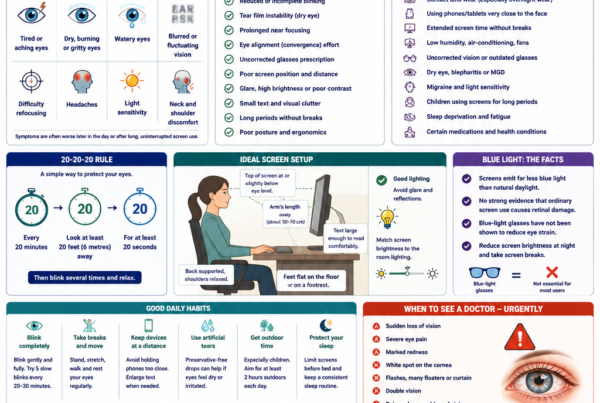
Common symptoms include:
- Burning or stinging
- Grittiness or a sandy sensation
- Tired or heavy eyes
- Redness
- Itching
- Fluctuating or intermittently blurred vision
- Sensitivity to light
- Difficulty wearing contact lenses
- Stringy mucus around the eyes
- Excessive tearing
- Eye discomfort that worsens later in the day
Some patients describe needing to blink repeatedly before their vision becomes clear. This happens because blinking temporarily restores a smoother tear film over the cornea.
Why Do Dry Eyes Sometimes Water?
It may seem contradictory for dry eyes to produce excessive tears.
When the ocular surface becomes dry or irritated, the eye may respond by producing a sudden flow of reflex tears. These watery tears can overflow onto the cheeks but may not contain enough oil to remain on the eye for long.
The result can be a cycle of:
Dryness → irritation → reflex tearing → rapid evaporation → further dryness
Watery eyes therefore do not necessarily mean that the tear film is healthy.
The Two Main Forms of Dry Eye
Dry eye is often described as aqueous-deficient or evaporative, although many patients have features of both.
Aqueous-Deficient Dry Eye
This occurs when the lacrimal glands do not produce enough of the watery component of tears.
Possible causes include:
- Age-related reduction in tear production
- Sjögren syndrome
- Other autoimmune conditions
- Certain medications
- Previous eye surgery or injury
- Damage to the lacrimal glands
Evaporative Dry Eye
This occurs when tears evaporate too quickly.
A frequent contributor is meibomian gland dysfunction. The meibomian glands are located within the eyelids and produce oils that slow tear evaporation.
When these glands become blocked or inflamed, the oil may become thick or insufficient. The watery part of the tears then evaporates rapidly, especially in air-conditioned or windy environments.
What Causes Dry Eyes?
Meibomian Gland Dysfunction
Meibomian gland dysfunction is a major cause of evaporative dry eye.
The glands may become blocked, shortened or less productive over time. Associated conditions include:
- Blepharitis
- Rosacea
- Ageing
- Prolonged screen use
- Contact lens wear
- Previous eyelid inflammation
Symptoms may include burning, fluctuating vision and discomfort that worsens as the day progresses.
Prolonged Screen Use
People blink less frequently and less completely while using computers, smartphones and tablets.
Reduced blinking allows tears to evaporate and may prevent the meibomian glands from releasing oil effectively.
This is why dry-eye symptoms often worsen during:
- Office work
- Gaming
- Online meetings
- Reading on digital devices
- Long periods of concentrated near work
Air Conditioning and the Environment
Low humidity, air conditioning, fans, smoke and wind all accelerate tear evaporation.
This is particularly relevant in Singapore, where many people spend long hours in air-conditioned offices, clinics, classrooms and vehicles.
Contact Lens Wear
Contact lenses interact directly with the tear film and may increase evaporation or friction on the eye’s surface.
Symptoms may worsen when lenses are:
- Worn for prolonged periods
- Used in dry environments
- Worn beyond their replacement schedule
- Combined with inadequate blinking or poor lens hygiene
Age and Hormonal Changes
Tear production and meibomian gland function may decline with age.
Dry eye is also more common after menopause and may be influenced by hormonal changes.
Medications
Several medications may contribute to dry-eye symptoms, including:
- Antihistamines
- Some antidepressants
- Certain blood-pressure medications
- Diuretics
- Isotretinoin
- Hormonal treatments
- Some medications for bladder conditions
- Long-term use of preserved eye drops
Do not stop prescribed medication without first discussing it with your doctor.
Medical Conditions
Dry eye may be associated with:
- Sjögren syndrome
- Rheumatoid arthritis
- Thyroid eye disease
- Diabetes
- Rosacea
- Parkinson’s disease
- Lupus
- Other autoimmune or neurological conditions
Persistent or severe dry eye occasionally warrants investigation for an underlying systemic disease.
Eye Surgery
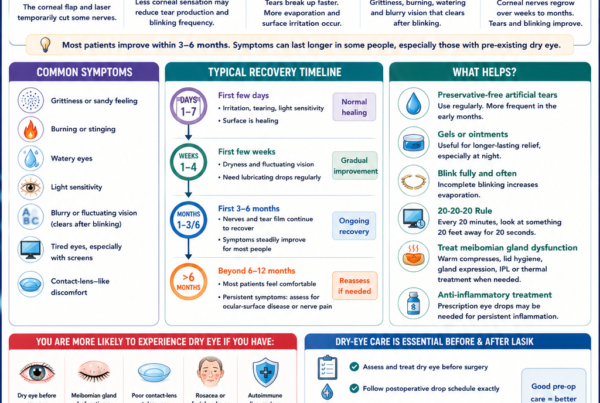
Dry-eye symptoms may temporarily worsen after:
- LASIK
- SMILE
- PRK
- Cataract surgery
- Eyelid surgery
This may result from temporary disruption of corneal nerves, ocular-surface inflammation, medication use or changes in blinking.
Most postoperative dryness improves with time, but pre-existing ocular-surface disease should ideally be treated before surgery.
Eyelid Problems
The eyelids must close fully and spread the tear film evenly with each blink.
Dryness may occur when there is:
- Incomplete blinking
- Incomplete eyelid closure
- Eyelid malposition
- Facial-nerve weakness
- Prominent or protruding eyes
Why Does Dry Eye Cause Blurred Vision?
The tear film forms the eye’s first refractive surface.
When it is smooth and stable, light enters the eye clearly. When the tear film breaks up, the optical surface becomes irregular, causing vision to fluctuate.
Typical features include:
- Vision that clears after blinking
- Intermittent blur during screen use
- Difficulty maintaining focus
- Variable spectacle measurements
- Glare, especially at night
Treating the ocular surface can improve both comfort and the consistency of vision.
Who Is More Likely to Develop Dry Eye?
Risk factors include:
- Increasing age
- Female sex and hormonal changes
- Heavy digital-device use
- Contact lens wear
- Air-conditioned or low-humidity environments
- Eyelid or meibomian gland disease
- Autoimmune conditions
- Diabetes
- Rosacea
- Previous eye surgery
- Long-term use of certain medications or preserved eye drops
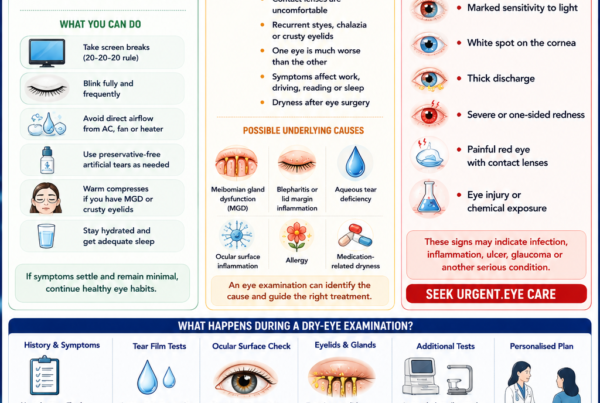
How Is Dry Eye Diagnosed?
Dry eye cannot always be diagnosed from symptoms alone.
Some patients have significant symptoms with only subtle visible changes, while others have obvious ocular-surface damage but relatively little discomfort.
A comprehensive assessment may include:
Symptom History
Your ophthalmologist may ask:
- When symptoms occur
- Whether they worsen with screens or air conditioning
- Whether vision fluctuates
- Whether contact lenses are worn
- Which medications are being used
- Whether there are symptoms of autoimmune disease
Tear-Film Examination
The tear film may be assessed for:
- Stability
- Volume
- Debris
- Mucus
- Speed of tear-film breakup
Ocular-Surface Staining
Special dyes highlight areas of corneal or conjunctival damage that may not otherwise be visible.
Eyelid and Meibomian Gland Assessment
The eyelid margins and gland openings are examined for:
- Blockage
- Inflammation
- Thickened secretions
- Gland loss
- Blepharitis
- Demodex infestation where relevant
Tear Production Tests
Selected patients may undergo tests such as the Schirmer test to estimate aqueous tear production.
Additional Imaging
When appropriate, additional tests may include:
- Meibography
- Tear-film interferometry
- Tear osmolarity
- Corneal topography
- Non-invasive tear-breakup measurements
Not every patient requires every test. The aim is to determine which mechanisms are driving the symptoms.
How Are Dry Eyes Treated?
Treatment should be matched to the cause and severity of the disease.
Artificial Tears
Lubricating eye drops supplement the natural tear film and reduce friction.
For frequent use, preservative-free artificial tears are generally preferred because preservatives may irritate the ocular surface in some patients.
Different formulations are available:
- Watery drops for mild symptoms
- More viscous gels for longer relief
- Lipid-containing drops for evaporative dry eye
- Ointments for nighttime symptoms
The most suitable product varies between individuals.
Warm Compresses
Warm compresses help soften thickened oils within the meibomian glands.
For best effect:
- Apply a comfortably warm compress over the closed eyelids.
- Maintain warmth for several minutes.
- Gently massage the eyelids afterwards if advised.
- Repeat consistently rather than only during severe flare-ups.
The compress should be warm, not hot enough to burn the skin.
Eyelid Hygiene
Cleaning the eyelid margins can help manage blepharitis and reduce debris around the lashes.
Commercial eyelid wipes or a clinician-recommended cleaning method may be used.
Improve Blinking During Screen Use
During prolonged digital-device use:
- Blink consciously and fully.
- Follow the 20-20-20 rule.
- Position the screen slightly below eye level.
- Take regular breaks.
- Increase text size rather than moving closer.
- Avoid a fan or air-conditioning vent blowing directly at the face.
Modify the Environment
Helpful measures include:
- Using a humidifier in very dry rooms
- Avoiding direct airflow
- Wearing wraparound glasses outdoors in windy conditions
- Taking breaks from air-conditioned environments where practical
- Avoiding cigarette smoke
Adjust Contact Lens Wear
Contact lens wearers may benefit from:
- Shorter wearing times
- Daily disposable lenses
- Different lens materials
- Preservative-free lubricants approved for contact-lens use
- Treating underlying eyelid disease
- Taking occasional days off from lenses
Lenses should be removed if the eyes become red, painful or unusually sensitive to light.
Prescription Anti-Inflammatory Treatment
Moderate or persistent dry eye may require prescription treatment to reduce ocular-surface inflammation.
Options may include:
- Short courses of topical corticosteroids under supervision
- Ciclosporin eye drops
- Other immunomodulating or anti-inflammatory treatments
- Antibiotic or anti-inflammatory treatment for selected eyelid disease
These treatments should be prescribed and monitored by an eye-care professional.
Punctal Plugs
Small plugs may be inserted into the tear-drainage openings to help retain natural and artificial tears for longer.
They are more suitable for selected patients and may be less helpful when uncontrolled eyelid inflammation is present.
Meibomian Gland Treatments
For significant evaporative dry eye, treatment options may include:
- Therapeutic gland expression
- Thermal pulsation
- Intense pulsed light in selected patients
- Other in-clinic heat or light-based treatments
The best option depends on gland structure, inflammation, symptoms and previous treatment response.
Severe Dry Eye
More advanced disease may require:
- Autologous serum eye drops
- Scleral contact lenses
- Moisture-chamber eyewear
- Amniotic membrane treatment
- Treatment of eyelid closure problems
- Investigation for autoimmune disease
Do Omega-3 Supplements Help?
Omega-3 supplements are frequently marketed for dry eye.
Research results have been mixed. Some smaller studies have suggested benefit, but a large randomised trial did not find a meaningful advantage over placebo.
A diet containing oily fish, nuts and other healthy fats may still support general health, but supplements should not be presented as a guaranteed dry-eye treatment.
Patients taking anticoagulants or those with other medical conditions should discuss supplements with their doctor.
What Should I Avoid?
Try to avoid:
- Using redness-relieving drops repeatedly without medical advice
- Sharing eye drops
- Touching the bottle tip to the eye
- Wearing contact lenses through significant discomfort
- Assuming all dry eye has the same cause
- Frequently changing treatments before allowing sufficient time to work
Dry eye often requires consistent treatment over weeks or months rather than occasional treatment only when symptoms become severe.
When Should I See an Eye Specialist?
Arrange an eye examination if:
- Symptoms persist despite lubricating drops
- Vision frequently fluctuates
- Contact lenses have become uncomfortable
- The eyes remain persistently red
- Symptoms interfere with reading, driving or work
- You require drops many times each day
- Dryness worsened after eye surgery
- You have an autoimmune condition
- One eye is much worse than the other
Warning Signs That Need Prompt Assessment
Dry eye usually causes irritation rather than severe pain or major loss of vision.
Seek prompt ophthalmic assessment if you develop:
- Significant eye pain
- Sudden or persistent reduction in vision
- Marked sensitivity to light
- Severe or one-sided redness
- A white spot on the cornea
- Thick discharge
- Eye injury or chemical exposure
- A painful red eye while wearing contact lenses
These symptoms may indicate infection, inflammation or another condition requiring urgent treatment.
Frequently Asked Questions
Is dry eye permanent?
Dry eye is often chronic, but symptoms can usually be controlled. The condition may fluctuate depending on screen use, climate, medication, hormones and eyelid health.
Can drinking more water cure dry eye?
Good hydration supports general health but does not usually correct meibomian gland dysfunction, inflammation or significant tear deficiency on its own.
Why are my eyes dry after waking?
Nighttime dryness may result from incomplete eyelid closure, reduced tear production during sleep, air-conditioning or underlying ocular-surface disease.
Can dry eye cause permanent damage?
Mild dry eye usually causes discomfort and fluctuating vision. Severe or untreated disease can occasionally damage the corneal surface and increase the risk of infection or scarring.
Are artificial tears safe to use every day?
Yes, but preservative-free products are generally preferred when drops are required frequently. Persistent symptoms should still be assessed to identify the underlying cause.
Can dry eye cause headaches?
Dry eye and visual fluctuation may contribute to eye strain or discomfort, particularly during screen use. Recurrent headaches may also have other causes and should not automatically be attributed to dry eye.
The Bottom Line
Dry eye disease is not simply a shortage of tears. It may result from rapid tear evaporation, meibomian gland dysfunction, reduced tear production, inflammation, incomplete blinking or a combination of these factors.
Effective treatment begins by identifying the main cause.
Artificial tears, warm compresses, eyelid care, better screen habits and environmental changes may help mild disease. Persistent or more severe symptoms may require prescription anti-inflammatory treatment, meibomian gland therapy or other specialised care.
If your eyes frequently feel dry, gritty, tired or watery—or if your vision clears temporarily after blinking—a comprehensive eye examination can help identify the cause and guide more effective treatment.
References
- Perez VL, et al. TFOS DEWS III Executive Summary. American Journal of Ophthalmology. 2025.
- Wolffsohn JS, et al. TFOS DEWS III: Diagnostic Methodology. American Journal of Ophthalmology. 2025.
- Craig JP, et al. TFOS DEWS II Definition and Classification Report. The Ocular Surface. 2017.
- Jones L, et al. TFOS DEWS II Management and Therapy Report. The Ocular Surface. 2017.
- American Academy of Ophthalmology. Dry Eye Syndrome Preferred Practice Pattern.
- National Institute for Health and Care Excellence. Dry Eye Disease: Assessment and Management.
- Asbell PA, et al. n-3 Fatty Acid Supplementation for the Treatment of Dry Eye Disease. New England Journal of Medicine. 2018.