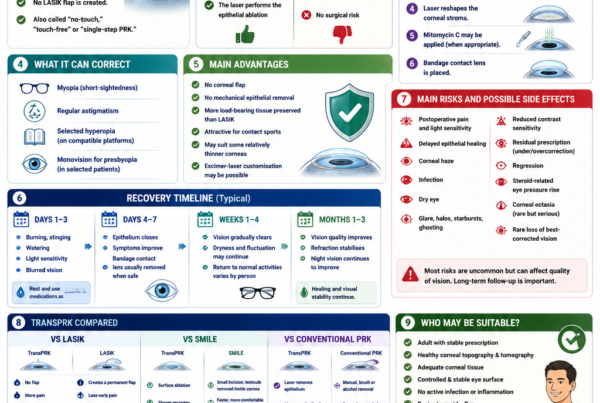
One of the main differences between PRK and LASIK is how the laser reaches the tissue that needs to be reshaped.
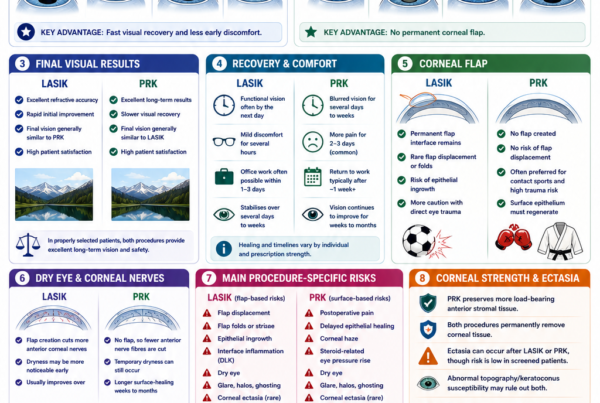
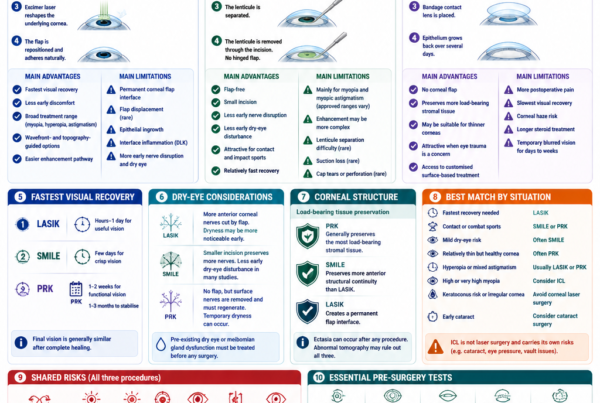
With LASIK, a thin corneal flap is created and lifted before laser treatment.
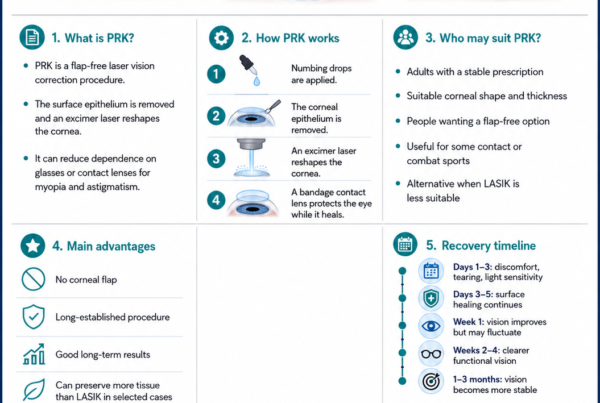
With PRK, there is no flap.
This preserves more of the anterior corneal structure and avoids complications that are specifically related to the presence of a LASIK flap.
For selected patients, that can make PRK an attractive option.
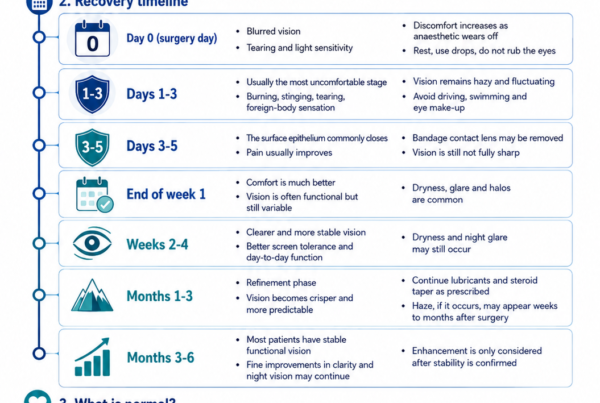
The trade-off is that recovery is slower.
PRK may offer:
● No corneal flap
● Less corneal tissue disruption than some flap-based treatments
● Suitability for selected thinner corneas
● No long-term risk of traumatic displacement of a LASIK flap
● Excellent visual outcomes in appropriately selected patients
But compared with LASIK or SMILE:
● The first few days are generally more uncomfortable
● Vision takes longer to clear
● Visual fluctuations may continue for several weeks
● Eye drops are required for longer
● Corneal haze is a potential complication, particularly with larger corrections
For this reason, I do not consider PRK automatically “better” or “worse” than LASIK or SMILE.
The question is which procedure best suits the individual eye.