Author: Dr Val Phua
Estimated reading time: 17 minutes
LASIK is a well-established form of laser vision correction that can provide excellent vision and rapid recovery in appropriately selected patients.
However, LASIK is elective surgery performed on an otherwise healthy cornea. The aim should not simply be to determine whether a prescription can technically be treated. The more important question is whether LASIK provides a sufficiently wide safety margin for that particular eye.
Some patients should not undergo LASIK because the procedure could:
- Weaken an already vulnerable cornea
- Worsen severe dry-eye disease
- Produce an unpredictable refractive result
- Interfere with future glaucoma monitoring
- Fail to treat the true cause of blurred vision
- Create unnecessary flap-related risk
- Provide less benefit than another form of vision correction
Other patients may not be suitable at present but could reconsider surgery after their prescription, pregnancy, eye surface or medical condition has stabilised.
Contraindications are not always identical across every laser platform or country. Current professional reviews distinguish between absolute contraindications—where corneal laser surgery should generally not be performed—and relative contraindications that require individual assessment. Absolute concerns include unstable refraction, keratoconus, poorly controlled dry eye, active autoimmune disease and poorly controlled diabetes. Pregnancy, glaucoma history, previous uveitis and selected medications are commonly treated as relative or temporary contraindications.
LASIK Is Not the Best Procedure for Everyone
A patient should not choose LASIK simply because:
- It is widely advertised
- A friend had a good result
- It has a fast recovery
- The spectacle prescription falls within a laser’s treatment range
- An initial screening machine says the cornea is thick enough
- It is the only refractive procedure offered by a particular clinic
LASIK creates a permanent corneal flap and permanently removes stromal tissue. The removed tissue cannot be replaced, and the cornea cannot be returned completely to its original structure.
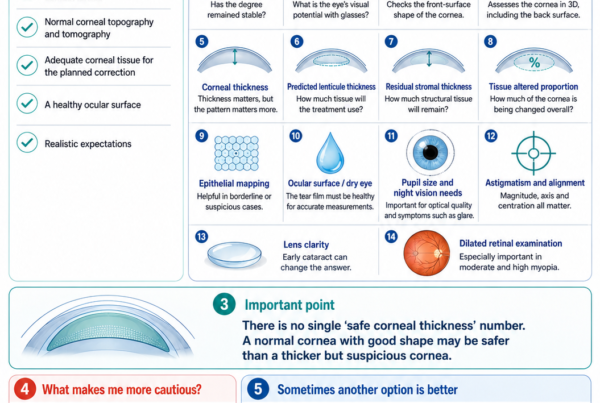
A careful decision must consider:
- Prescription stability
- Corneal topography and tomography
- Corneal thickness
- Expected tissue removal
- Residual stromal-bed thickness
- Epithelial thickness distribution
- Dry-eye and eyelid health
- Pupil size
- Eye pressure and optic nerve health
- Natural-lens clarity
- Retinal health
- General health
- Occupation and lifestyle
- Expectations regarding glasses and visual quality
The safest recommendation may be LASIK, SMILE, PRK, an Implantable Collamer Lens, cataract surgery, spectacles, contact lenses—or no operation.
Three Different Reasons Not to Have LASIK
It is useful to divide patients into three groups.
Patients Who Should Generally Not Have LASIK
These may include patients with:
- Keratoconus or another corneal ectatic disorder
- An unstable prescription
- Insufficient corneal tissue
- Severe, poorly controlled dry-eye disease
- Active eye infection or inflammation
- Active autoimmune disease affecting healing
- Poorly controlled diabetes
- Significant cataract causing the visual symptoms
- Unrealistic expectations that surgery cannot meet
Patients Who Should Postpone LASIK
These may include patients who are:
- Pregnant
- Breastfeeding
- Still experiencing myopia progression
- Recovering from an eye infection or inflammation
- Undergoing treatment for dry eye, blepharitis or allergy
- Taking medication that temporarily affects refraction or healing
- Waiting for contact lens-induced corneal distortion to resolve
- Experiencing unstable diabetes-related vision
Patients Who Require Individual Specialist Assessment
These may include patients with:
- Controlled glaucoma or ocular hypertension
- Controlled diabetes
- Stable autoimmune disease
- A previous ocular herpes infection
- Previous corneal or refractive surgery
- A family history of keratoconus
- Borderline corneal measurements
- High myopia
- Large pupils
- Amblyopia or strabismus
- Previous retinal surgery
- A high risk of direct eye trauma
A relative contraindication does not necessarily mean that surgery is impossible. It means the balance between benefit and risk requires greater caution.
Patients With an Unstable Prescription Should Not Have LASIK Yet
LASIK corrects the prescription measured at the time of surgery. It does not stop the eye from continuing to grow or change.
A patient whose myopia is still progressing may initially see well after surgery but later become short-sighted again.
Possible consequences include:
- Renewed dependence on spectacles
- Reduced satisfaction
- A request for enhancement
- Further removal of corneal tissue
- Inability to undergo enhancement because insufficient tissue remains
Many current laser indications define refractive stability as no more than approximately 0.50 dioptres of change over the preceding year, although the exact criterion varies by platform and jurisdiction.
Who Is More Likely to Have an Unstable Prescription?
This includes some patients who are:
- In their late teens or early twenties
- Experiencing continuing myopia progression
- Pregnant or breastfeeding
- Poorly controlled diabetic
- Developing cataract
- Taking medication that affects vision
- Wearing contact lenses that distort the corneal shape
- Experiencing severe tear-film instability
The FDA specifically identifies recent changes in spectacle or contact lens prescription, young age, pregnancy, breastfeeding, diabetes-related hormonal changes and vision-altering medication as reasons for concern about refractive instability.
Patients Under 18 Should Not Have Routine LASIK
LASIK is generally not performed in children because:
- The eye is still developing
- Myopia may continue to progress
- The long-term refractive result is less predictable
- The patient may not fully understand the permanent nature of surgery
The FDA states that no lasers are approved for LASIK in people below 18 years of age. Some individual platforms have higher minimum ages, such as 21 or 22 years.
Reaching the minimum age does not automatically establish suitability. An 18- or 21-year-old whose prescription is still increasing should usually wait until stability is demonstrated.
Pregnant or Breastfeeding Patients Should Postpone LASIK
Pregnancy and breastfeeding can temporarily change:
- Corneal thickness
- Corneal curvature
- Tear production
- Contact lens tolerance
- Refraction
- Hormonal and fluid balance
The prescription measured during this period may not represent the patient’s long-term refractive state.
Published reviews and current guidance generally recommend postponing LASIK and other corneal refractive procedures during pregnancy. Surgery can be reconsidered after breastfeeding has stopped and the refraction and corneal measurements have stabilised again.
Pregnancy after an uncomplicated LASIK procedure is not automatically dangerous. However, pregnancy-related corneal and refractive changes have been reported, including rare progression of corneal ectasia in susceptible eyes.
Patients With Keratoconus Should Not Have LASIK
Keratoconus is a condition in which the cornea becomes progressively thinner, weaker and more irregular.
LASIK permanently removes corneal tissue and creates a flap. Performing LASIK on a keratoconic or structurally unstable cornea can accelerate weakening and cause postoperative corneal ectasia.
Possible consequences include:
- Increasing myopia
- Progressive irregular astigmatism
- Ghosting or multiple images
- Reduced best-corrected vision
- Difficulty achieving clear vision with spectacles
- Dependence on rigid or scleral contact lenses
- Need for corneal cross-linking
- Rarely, corneal transplantation
LASIK should generally be avoided in:
- Definite keratoconus
- Forme-fruste or subclinical keratoconus
- Pellucid marginal degeneration
- Progressive corneal thinning
- Previous corneal ectasia
- Strongly suspicious tomography
Keratoconus and abnormal corneal shape are among the most important contraindications to LASIK.
A Normal-Looking Front Corneal Map Is Not Always Enough
Modern assessment should not rely only on the front curvature map.
A structurally vulnerable cornea may show abnormalities in:
- Posterior corneal elevation
- Thickness distribution
- Pachymetric progression
- The position of the thinnest point
- Epithelial thickness
- Corneal biomechanical behaviour
- Asymmetry between the two eyes
Post-refractive ectasia is uncommon, but it has been reported after LASIK, PRK and SMILE. A systematic review estimated that reported ectasia in eyes without identifiable preoperative risk factors was more frequent after LASIK than after PRK, although comparisons are limited by differences in patient selection, reporting and procedure volumes.
No scan or formula can guarantee that ectasia will never occur. The purpose of testing is to reduce avoidable risk as much as possible.
Patients With a Family History of Keratoconus Need Extra Caution
A family history does not automatically exclude surgery, but it should increase suspicion.
Additional assessment may include:
- Repeat tomography
- Epithelial thickness mapping
- Corneal biomechanical testing
- Comparison between both eyes
- Review of older refractions
- Assessment for allergy and habitual eye rubbing
- A period of observation before deciding
A patient with borderline scans and a strong family history may be better advised to avoid elective corneal tissue removal.
Patients Who Rub Their Eyes Vigorously May Be Poor Candidates
Habitual vigorous eye rubbing is associated with corneal deformation and may contribute to progression in susceptible corneas.
The issue is particularly important in patients with:
- Allergic conjunctivitis
- Eczema or atopy
- Keratoconus risk
- Asymmetric corneal shape
- Progressive astigmatism
- A family history of keratoconus
Allergy should be treated and forceful eye rubbing stopped before elective refractive surgery is considered.
When the patient cannot control habitual rubbing, avoiding LASIK—and sometimes avoiding all corneal laser surgery—may be safer.
Patients With Insufficient Corneal Tissue Should Not Have LASIK
LASIK requires:
- Creation of a corneal flap
- Removal of stromal tissue beneath the flap
The amount of tissue removed depends on:
- The degree of myopia or hyperopia
- The amount of astigmatism
- Optical-zone diameter
- Laser-treatment profile
- Flap thickness
- Corneal thickness
The flap remains physically present, but most of it does not contribute fully to the load-bearing residual stromal bed.
Important calculations may include:
- Expected flap thickness
- Expected ablation depth
- Residual stromal-bed thickness
- Percentage of tissue altered
- Total remaining corneal thickness
High percentage of tissue altered, low residual stromal-bed thickness, high myopia and abnormal topography have all been associated with post-LASIK ectasia risk.
There Is No Universal “Safe Corneal Thickness”
A single corneal-thickness number cannot determine safety.
A relatively thick cornea may still be unsafe because of:
- Abnormal tomography
- Early keratoconus
- Unusual epithelial compensation
- High planned tissue removal
- Significant asymmetry
- Poor biomechanical behaviour
A relatively thin cornea may occasionally be suitable for PRK or another approach if its shape is normal and adequate structural tissue remains.
The complete corneal profile matters more than a single central thickness reading.
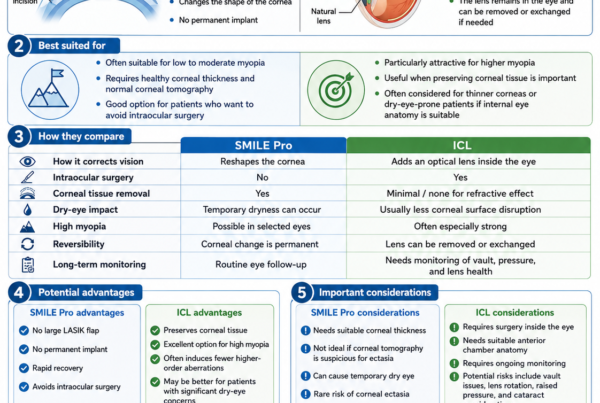
Patients With Very High Myopia May Be Better Suited to ICL
High myopia is not an automatic contraindication to LASIK, but higher corrections require more tissue removal.
This may increase:
- Corneal ectasia concern
- Refractive regression
- Night-vision symptoms
- Higher-order aberrations
- Residual prescription
- The likelihood that enhancement will be impossible
A patient with a large prescription may obtain a safer structural result with an Implantable Collamer Lens because ICL corrects myopia without removing central corneal tissue.
ICL introduces different risks, including:
- Cataract
- Raised eye pressure
- Incorrect vault
- Corneal endothelial cell loss
- Inflammation
- Infection
The decision should compare the risks of corneal tissue removal with those of an intraocular implant rather than assuming laser surgery is always less invasive.
Patients With Severe Dry Eye Should Not Have LASIK
LASIK temporarily disrupts the corneal nerves involved in:
- Tear secretion
- Blinking
- Corneal sensation
- Ocular-surface regulation
Postoperative dry eye may cause:
- Burning
- Grittiness
- Pain
- Watering
- Light sensitivity
- Fluctuating vision
- Reduced quality of vision
- Contact lens intolerance
Patients with pre-existing dry-eye disease have a greater risk of more severe or persistent symptoms after corneal refractive surgery. LASIK has a particularly strong association with postoperative ocular-surface disturbance because of flap-related corneal denervation.
Dry-Eye Conditions That Should Be Treated Before LASIK
These include:
- Meibomian gland dysfunction
- Blepharitis
- Demodex infestation
- Allergic conjunctivitis
- Corneal staining
- Tear-film instability
- Aqueous tear deficiency
- Contact lens-related inflammation
- Incomplete eyelid closure
- Excessive screen-related reduced blinking
Measurements should be repeated after the ocular surface has stabilised because dry eye can affect both refraction and corneal mapping.
When Dry Eye May Rule Out LASIK
LASIK may be inappropriate when there is:
- Severe aqueous-deficient dry eye
- Sjögren syndrome with ocular-surface disease
- Persistent corneal staining despite treatment
- Significant corneal sensation loss
- Exposure keratopathy
- Severe contact lens intolerance caused by dryness
- Ocular pain that is disproportionate to visible surface findings
- Suspected neuropathic corneal pain
- Unstable measurements despite adequate treatment
Chronic dry eye after LASIK is uncommon in some prospective cohorts, but preoperative tear-film and ocular-surface abnormalities help predict who is at greater risk.
Normal Preoperative Tear Symptoms Do Not Eliminate Dry-Eye Risk
A patient who feels comfortable before surgery can still develop dryness afterwards.
In the FDA’s PROWL studies, up to 28% of participants who did not report dry-eye symptoms before LASIK reported symptoms at three months. More than 95% were satisfied with their vision, but the results reinforce the need to discuss side effects rather than presenting LASIK as symptom-free.
Patients With Active Blepharitis or Eye Infection Should Wait
LASIK should not be performed while there is active:
- Blepharitis
- Bacterial conjunctivitis
- Viral conjunctivitis
- Corneal infection
- Significant allergic inflammation
- Keratitis
- Uveitis or iritis
- Eyelid infection
Active disease may increase the risks of:
- Infection
- Delayed healing
- Inflammation beneath the flap
- Corneal scarring
- Unstable measurements
- Poor visual quality
The FDA specifically identifies blepharitis as a condition that may increase infection or corneal inflammation after LASIK.
Surgery can be reconsidered only after the condition has been adequately treated and the eye has remained stable.
Patients With Significant Cataract Should Not Have LASIK
LASIK reshapes the cornea. It does not remove or treat the natural crystalline lens.
Cataract may cause:
- Blurred vision
- Glare
- Halos
- Reduced contrast sensitivity
- Difficulty driving at night
- Frequent prescription change
- Myopic shift
- Reduced best-corrected vision
Treating the cornea will not correct blur that is primarily caused by a cloudy natural lens.
In addition, LASIK can make future cataract intraocular-lens calculations more complex. Patients who have previously undergone laser vision correction should retain their old refractive and surgical records for future cataract planning.
When cataract is causing meaningful symptoms, cataract surgery is generally more logical than altering the cornea in front of the cloudy lens.
Patients Over 40 Need Careful Natural-Lens Assessment
Age itself does not rule out LASIK.
However, patients in their forties and fifties may have:
- Presbyopia
- Early cataract
- Natural-lens-related prescription change
- Reduced night contrast
- A shorter interval before cataract surgery
LASIK does not prevent presbyopia. When both eyes are corrected fully for distance, reading glasses may be needed.
A myopic patient who previously read by removing their glasses may notice a significant reduction in unaided near vision after full distance correction. This is not because LASIK caused presbyopia; it removed the myopia that was providing a near focal point.
Patients with early lens changes may benefit more from continued observation or lens-based surgery than from corneal laser correction.
Patients With Unrealistic Expectations Should Not Proceed
LASIK aims to reduce dependence on spectacles and contact lenses. It does not guarantee:
- Perfect vision at every distance
- Better visual quality than contact lenses
- Permanent spectacle independence
- No dry eye
- No glare or halos
- Perfect night driving
- No residual prescription
- No future enhancement
- No reading glasses
- No cataract or glaucoma later in life
A patient who regards any need for glasses as failure may not be psychologically or practically suitable for elective refractive surgery.
The FDA’s PROWL findings showed high overall satisfaction, but up to 46% of participants without preoperative visual symptoms reported at least one visual symptom at three months. Halos were the most frequently reported new symptom. Fewer than 1% reported major difficulty performing usual activities because of any one visual symptom.
This means that most patients do well, but good eye-chart vision does not guarantee perfect subjective visual quality.
Patients With Severe Pre-existing Visual Symptoms Need Careful Counselling
Patients who already experience:
- Severe glare
- Starbursts
- Ghosting
- Halos
- Poor night driving
- Fluctuating vision
should not assume that LASIK will correct these symptoms.
The symptoms may arise from:
- Dry eye
- Irregular astigmatism
- Large pupils
- Cataract
- Corneal higher-order aberrations
- Retinal disease
- Migraine
- Neurological causes
The underlying cause must be identified before surgery.
Large Pupils Are Not an Automatic Contraindication
Large pupils in dim conditions may increase the risk or awareness of:
- Halos
- Glare
- Starbursts
- Ghost images
- Reduced night-time contrast
The FDA recommends assessing pupil size in dim lighting and counselling patients about possible night-vision symptoms.
Suitability also depends on:
- Optical-zone diameter
- Degree of correction
- Laser profile
- Treatment centration
- Pre-existing aberrations
- Tear-film stability
A large pupil may be a reason for additional counselling or treatment customisation rather than an automatic reason to refuse surgery.
Patients With Uncontrolled Glaucoma Should Not Have LASIK
LASIK can complicate glaucoma management in several ways.
Eye-Pressure Readings May Become Artificially Lower
LASIK changes:
- Corneal thickness
- Corneal curvature
- Corneal biomechanics
Standard Goldmann applanation tonometry may underestimate eye pressure after surgery. This can make future glaucoma detection or monitoring more difficult.
Steroid Drops Can Raise Eye Pressure
Postoperative steroid medication may cause pressure elevation in steroid responders.
The Suction Ring Temporarily Raises Pressure During Surgery
The pressure rise is brief, but patients with advanced optic nerve damage may have less reserve.
The Flap Interface Can Conceal Severe Pressure Elevation
Rare interface fluid syndrome may develop when markedly raised pressure causes fluid accumulation under the LASIK flap. Central pressure measurement can then be misleadingly low.
LASIK is generally inappropriate when glaucoma is:
- Uncontrolled
- Moderate or advanced
- Progressing
- Associated with significant visual-field loss
- Difficult to monitor reliably
A glaucoma suspect or patient with controlled mild disease requires individual assessment, baseline documentation and a long-term pressure-monitoring plan.
Patients With Active or Poorly Controlled Diabetes Should Not Have LASIK
Poorly controlled diabetes can cause:
- Fluctuating refraction
- Delayed epithelial healing
- Increased infection risk
- Dry-eye symptoms
- Corneal neuropathy
- Diabetic retinopathy
- Diabetic macular oedema
Active or poorly controlled diabetes is widely regarded as a contraindication to elective corneal laser surgery.
LASIK may be considered in selected patients with:
- Stable and tight glucose control
- A stable refraction
- No significant diabetic retinopathy
- No diabetic macular oedema
- No corneal neuropathy
- A healthy ocular surface
- No major systemic complication affecting healing
Published reviews and clinical series suggest that carefully selected patients with well-controlled diabetes may achieve acceptable results, but enhancement or healing concerns may be more relevant than in patients without diabetes.
Patients With Active Autoimmune Disease Should Not Have LASIK
Active autoimmune or connective-tissue disease may increase the risk of:
- Poor wound healing
- Severe dry eye
- Corneal melting
- Persistent inflammation
- Infection
- Unpredictable refractive results
Relevant conditions may include:
- Rheumatoid arthritis
- Systemic lupus erythematosus
- Sjögren syndrome
- Scleroderma
- Inflammatory bowel disease
- Psoriatic disease
- Other immune-mediated inflammatory disorders
Active autoimmune disease and poorly controlled systemic disease are regarded as contraindications in current reviews and regulatory guidance.
Can Stable Autoimmune Disease Ever Be Considered?
Possibly, in carefully selected cases.
Published series suggest that laser refractive surgery may be performed safely in some patients whose systemic disease is stable, well controlled and not significantly affecting the eye surface.
However, Sjögren syndrome with significant ocular-surface disease is generally a particularly poor setting for LASIK because dryness and epithelial healing are central concerns.
Assessment may require coordination with the patient’s rheumatologist or treating specialist.
Certain Medications May Be a Reason to Postpone LASIK
Medication can affect:
- Tear production
- Epithelial healing
- Immune response
- Corneal sensation
- Refraction
- Infection risk
Relevant medications may include:
- Isotretinoin
- Amiodarone
- Systemic steroids
- Immunosuppressants
- Chemotherapy
- Medication that causes severe dryness
- Medication that causes fluctuating vision
Current reviews identify isotretinoin and amiodarone among drugs requiring particular caution.
Medication should never be stopped solely to qualify for elective surgery without discussion with the prescribing doctor.
Patients With Recent Ocular Herpes Should Not Have LASIK
Previous herpes simplex or herpes zoster involving the eye may be associated with:
- Recurrent keratitis
- Corneal scarring
- Reduced corneal sensation
- Irregular astigmatism
- Delayed epithelial healing
- Reactivation after surgery
Recent infection or significant herpes-related corneal damage is a strong reason to avoid LASIK.
A remote history may not be an absolute contraindication in every case, but it requires careful assessment of:
- Time since the last episode
- Number of recurrences
- Corneal sensation
- Corneal clarity
- Use of prophylactic antiviral medication
- Alternative procedures
The FDA lists ocular herpes as an important precaution requiring discussion with the surgeon.
Patients With Corneal Dystrophy, Scarring or Recurrent Erosion May Be Unsuitable
Conditions affecting the corneal epithelium or stroma may interfere with flap creation or healing.
Examples include:
- Epithelial basement membrane dystrophy
- Recurrent corneal erosion
- Significant stromal dystrophy
- Corneal scars
- Reduced corneal sensation
- Previous severe keratitis
Potential complications include:
- Epithelial defects
- Epithelial ingrowth
- Irregular healing
- Flap complications
- Poor visual quality
- Recurrent pain
Another treatment—or no elective surgery—may be safer depending on the condition.
Patients With Active Uveitis Should Not Have LASIK
Uveitis is inflammation inside the eye.
LASIK should generally be postponed while inflammation is active because surgery and postoperative medication may:
- Trigger further inflammation
- Complicate treatment
- Increase pressure
- Produce unpredictable visual recovery
A remote, isolated episode of uveitis does not automatically exclude surgery, but the cause, duration of inactivity, medication requirements and risk of recurrence must be considered.
The FDA identifies previous uveitis or iritis as a condition requiring special caution.
Patients With Retinal or Optic Nerve Disease May Not Benefit
LASIK corrects the corneal focusing error. It cannot restore vision limited by:
- Amblyopia
- Myopic macular degeneration
- Epiretinal membrane
- Macular oedema
- Diabetic retinopathy
- Optic nerve damage
- Advanced glaucoma
- Previous retinal detachment
- Corneal or retinal scarring
The realistic postoperative visual potential is usually limited by the patient’s preoperative best-corrected vision.
A person whose vision does not reach normal levels with appropriate spectacles or contact lenses requires investigation before refractive surgery is considered.
LASIK Does Not Cure Amblyopia
Amblyopia is reduced visual development in an eye that did not achieve normal vision during childhood.
LASIK may reduce the refractive error but does not rebuild the visual pathways that failed to develop normally.
The eye should not be expected to see better than its established best-corrected potential.
When one eye has amblyopia, the stronger eye is functionally more important. Performing elective surgery on that eye requires particularly careful risk counselling.
Patients With Strabismus or Previous Double Vision Need Binocular Assessment
Changing the refractive balance between the eyes may:
- Unmask double vision
- Disturb a previously controlled eye deviation
- Alter accommodation and convergence
- Make monovision difficult to tolerate
Patients should disclose any history of:
- Squint or strabismus
- Patching during childhood
- Prism glasses
- Eye-muscle surgery
- Intermittent double vision
- Suppression or poor stereopsis
LASIK is not necessarily impossible, but additional binocular-vision testing may be required.
Patients at High Risk of Eye Trauma May Prefer SMILE or PRK
The LASIK flap becomes stable enough for normal daily activities, but the deeper interface never regains the structure of untouched cornea.
Severe direct trauma can displace or wrinkle a flap even years after surgery.
This is particularly relevant for:
- Boxers
- Martial artists
- Wrestlers
- Rugby players
- Water-polo players
- Military personnel
- Police or tactical personnel
- People in occupations with repeated facial trauma
The FDA identifies active participation in contact sports as a reason a patient may not be a good LASIK candidate.
SMILE or PRK may avoid the long-term presence of a hinged flap, although they have their own risks and still require adequate corneal structure.
Previous LASIK, PRK or Radial Keratotomy Requires Special Assessment
Additional refractive surgery may not be advisable after previous:
- LASIK
- PRK
- SMILE
- Radial keratotomy
- Corneal cross-linking
- Corneal transplantation
- Significant corneal injury
The surgeon must assess:
- Remaining corneal thickness
- Existing flap or incision anatomy
- Corneal shape
- Stability
- Previous treatment depth
- Scarring
- Ocular-surface health
- Visual potential
The FDA advises that repeat refractive surgery should only be considered after careful assessment of the individual situation.
Patients Whose Career Restricts LASIK Should Check Before Surgery
Some employers or professional bodies may regulate:
- The type of refractive procedure permitted
- The minimum recovery period
- Night-vision standards
- Documentation requirements
- Stability before returning to duty
This may be relevant to:
- Pilots
- Military personnel
- Police officers
- Commercial drivers
- Divers
- Emergency-service personnel
Patients should confirm occupational requirements before undergoing permanent surgery. The FDA specifically advises patients to check whether refractive surgery could jeopardise their career.
A Patient Who Is Uncomfortable With Risk Should Not Be Pressured
LASIK has a high satisfaction rate in properly selected patients, but no elective procedure is risk-free.
Potential adverse effects include:
- Dry eye
- Glare
- Halos
- Starbursts
- Ghosting
- Residual prescription
- Flap complications
- Infection
- Corneal ectasia
- Need for enhancement
- Rare loss of best-corrected vision
The FDA advises patients to consider whether they are comfortable accepting uncertainty and whether they understand that undercorrection, overcorrection or additional treatment may occur.
A patient who is satisfied with spectacles or contact lenses may reasonably decide that even a small surgical risk is unnecessary.
What Tests Identify Patients Who Should Not Have LASIK?
A proper assessment should include more than a quick corneal-thickness measurement.
Refraction and Visual Acuity
This assesses:
- Myopia or hyperopia
- Astigmatism
- Best-corrected vision
- Prescription stability
- Differences between manifest and cycloplegic refraction
Corneal Topography
Topography maps the front corneal curvature and may detect:
- Asymmetric astigmatism
- Keratoconus patterns
- Contact lens warpage
- Decentration
- Irregularity
Corneal Tomography
Tomography assesses:
- Anterior elevation
- Posterior elevation
- Thickness distribution
- Pachymetric progression
- The thinnest point
- Corneal asymmetry
Corneal Thickness and Tissue Calculations
These estimate:
- Flap thickness
- Laser-ablation depth
- Residual stromal bed
- Percentage of tissue altered
- Remaining structural reserve
Epithelial Thickness Mapping
The epithelium can partly conceal underlying stromal irregularity.
Abnormal epithelial patterns may suggest:
- Early keratoconus
- Contact lens warpage
- Localised corneal irregularity
- Previous surgery effects
Corneal Biomechanical Assessment
Biomechanical testing may add information about corneal deformation, but it cannot guarantee that ectasia will not develop.
Dry-Eye and Eyelid Examination
This may include:
- Tear-film stability
- Corneal and conjunctival staining
- Meibomian gland assessment
- Eyelid margin examination
- Tear production
- Corneal sensation
- Symptom questionnaires
Pupil Measurement
Pupils should be assessed under dim conditions when night vision is important.
Eye Pressure and Optic Nerve Assessment
Baseline documentation is important because future pressure measurement may be affected by corneal laser surgery.
Natural-Lens Examination
This identifies early cataract or lens-related prescription change.
Dilated Retinal Examination
This is particularly important in moderate and high myopia.
Laser surgery does not remove the retinal risks associated with an elongated myopic eye.
Why Contact Lenses Must Be Stopped Before Testing
Contact lenses can temporarily change:
- Corneal curvature
- Astigmatism
- Tear-film quality
- Refraction
- Corneal topography
Rigid and overnight lenses may produce more persistent warpage than standard soft lenses.
Surgery should not be planned until repeated measurements are stable after the appropriate contact lens-free interval.
What Are the Alternatives When LASIK Is Unsafe?
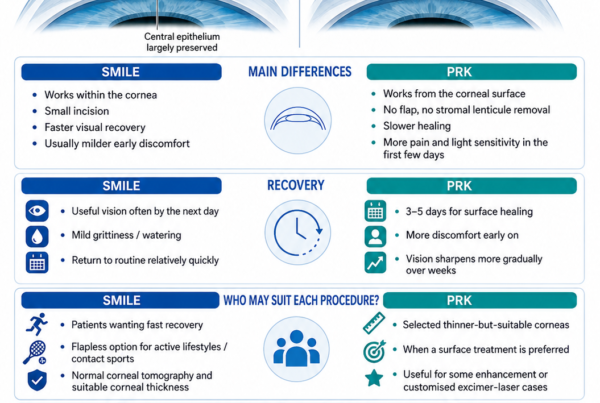
SMILE
SMILE may be considered when:
- Myopia or myopic astigmatism is within range
- Avoiding a flap is important
- Early dry-eye disturbance is a concern
- The cornea is otherwise structurally suitable
SMILE still permanently removes stromal tissue and is not suitable for keratoconus or inadequate corneal structure.
PRK or TransPRK
Surface ablation may be considered when:
- Avoiding a flap is important
- The cornea is relatively thin but structurally healthy
- PRK leaves a safer tissue margin
- Eye trauma is a concern
PRK involves:
- More postoperative pain
- Slower recovery
- Corneal haze risk
- Longer steroid treatment
- Its own ectasia risk
Implantable Collamer Lens
ICL may be appropriate when:
- Myopia is high
- Corneal tissue is insufficient
- The cornea is unsuitable for laser treatment
- Preserving central corneal tissue is important
- Internal eye anatomy is suitable
Cataract Surgery
Cataract surgery may be the correct procedure when the natural lens is already affecting:
- Vision
- Glare
- Contrast
- Prescription stability
- Night driving
Spectacles or Contact Lenses
These remain safe and appropriate choices for many patients.
Not qualifying for LASIK does not mean that the eye has failed a test. It means that the expected benefit does not justify the identified risk.
Frequently Asked Questions
Who Should Definitely Not Have LASIK?
Patients with definite keratoconus, unstable refraction, insufficient corneal tissue, severe uncontrolled dry eye, active eye infection, active autoimmune disease, poorly controlled diabetes or significant cataract generally should not undergo LASIK.
Can I Have LASIK if My Prescription Is Still Changing?
Usually not yet.
Surgery should generally wait until the prescription has demonstrated stability.
Can I Have LASIK During Pregnancy?
LASIK is generally postponed until pregnancy and breastfeeding are over and the refraction has stabilised.
Can I Have LASIK With a Thin Cornea?
Possibly, but a thin cornea may not have enough structural reserve for a flap and laser ablation.
PRK or ICL may be safer in selected cases. An abnormal thin cornea may be unsuitable for all corneal laser procedures.
Can I Have LASIK With Keratoconus?
Routine LASIK should not be performed in keratoconus because it can worsen corneal instability.
Can I Have LASIK With Dry Eyes?
Mild or moderate dry eye may sometimes be treated and stabilised before surgery.
Severe or persistent dry eye may rule out LASIK.
Can I Have LASIK if I Cannot Wear Contact Lenses?
It depends on why contact lenses are intolerable.
Inconvenience or poor fit may not be a contraindication. Severe dryness, allergy or corneal inflammation may make surgery riskier.
Can I Have LASIK With Diabetes?
Possibly when diabetes is tightly controlled and there is no significant corneal, retinal or healing problem.
Poorly controlled diabetes is unsuitable.
Can I Have LASIK With an Autoimmune Disease?
Active disease is generally unsuitable.
Stable, well-controlled disease may occasionally be considered after careful ophthalmic and medical assessment.
Can I Have LASIK With Glaucoma?
Uncontrolled or advanced glaucoma is generally unsuitable.
A glaucoma suspect or patient with controlled mild disease requires individual assessment and careful baseline documentation.
Can I Have LASIK if I Have Cataract?
LASIK does not treat cataract.
When cataract is causing the symptoms, cataract surgery is usually more appropriate.
Can I Have LASIK if I Play Contact Sports?
Possibly, but the permanent flap creates a long-term trauma consideration.
SMILE or PRK may be a better structural choice.
Can I Have LASIK With Large Pupils?
Possibly.
Large pupils are not an automatic contraindication but may increase concern about glare, halos and night vision.
Can I Have LASIK if One Eye Is Lazy?
Possibly, but LASIK will not cure amblyopia.
The eye’s visual potential usually remains limited to its previous best-corrected vision.
Can I Have LASIK After Previous LASIK?
An enhancement may be possible, but only after assessing corneal thickness, flap anatomy, tomography and prescription stability.
Is High Myopia a Reason Not to Have LASIK?
Not automatically.
However, the amount of tissue required may make LASIK less safe than ICL.
Is LASIK Unsafe After Age 40?
Not solely because of age.
Presbyopia, cataract and natural-lens changes become increasingly important and may make another strategy more appropriate.
Is LASIK Safe if My Screening Says My Cornea Is Thick?
Thickness alone does not establish safety.
The corneal shape, posterior elevation, tissue distribution, treatment depth and other risk factors must also be assessed.
Is PRK Always Safe When LASIK Is Unsafe?
No.
PRK avoids a flap but still removes corneal tissue. Keratoconus and severe ocular-surface disease may rule out PRK as well.
Is SMILE Always Safe When LASIK Is Unsafe?
No.
SMILE avoids a hinged flap but still removes a stromal lenticule. It requires a structurally suitable cornea.
Is ICL Always Safer Than LASIK?
No.
ICL preserves the cornea but introduces intraocular risks. The safest procedure depends on the patient’s anatomy and risk profile.
Key Takeaway
LASIK can be highly effective, but some patients should not undergo the procedure.
LASIK should generally be avoided when there is:
- Keratoconus or corneal instability
- Insufficient corneal tissue
- Unstable refraction
- Severe or poorly controlled dry eye
- Active eye infection or inflammation
- Active autoimmune disease
- Poorly controlled diabetes
- Significant cataract
- Uncontrolled or advanced glaucoma
- Expectations that surgery cannot realistically fulfil
LASIK should usually be postponed during:
- Pregnancy
- Breastfeeding
- Active myopia progression
- Treatment of dry eye, blepharitis or allergy
- Temporary medication-related refractive changes
- Active systemic disease
- Contact lens-induced corneal distortion
Additional caution is needed with:
- High myopia
- Large pupils
- Previous ocular herpes
- Controlled glaucoma
- Controlled diabetes
- Stable autoimmune disease
- Previous eye surgery
- Amblyopia or strabismus
- Contact or combat sports
- A family history of keratoconus
Being unsuitable for LASIK does not mean that vision cannot be corrected.
Depending on the findings, safer options may include:
- SMILE
- PRK or TransPRK
- Implantable Collamer Lens surgery
- Cataract surgery
- Spectacles
- Contact lenses
- No surgery
The best refractive procedure is not the one with the fastest recovery or strongest marketing. It is the procedure—or non-surgical option—that provides the desired visual benefit while preserving the widest long-term safety margin for the individual eye.
References
- US Food and Drug Administration. When Is LASIK Not for Me? FDA patient guidance.
- US Food and Drug Administration. LASIK Quality of Life Collaboration Project.
- US Food and Drug Administration. What Are the Risks and How Can I Find the Right Doctor for Me?
- Ortega-Usobiaga J, Rocha-de-Lossada C, Llovet-Rausell A, Llovet-Osuna F. Update on Contraindications in Laser Corneal Refractive Surgery. 2023. PMID: 36114139.
- Moshirfar M, et al. Ectasia After Corneal Refractive Surgery: A Systematic Review. 2021. PMID: 34417707.
- Randleman JB, Russell B, Ward MA, Thompson KP, Stulting RD. Risk Factors and Prognosis for Corneal Ectasia After LASIK. 2003. PMID: 12578766.
- Santhiago MR, et al. Ectasia Risk Factors in Refractive Surgery. 2016. PMID: 27143849.
- Bohac M, et al. Incidence and Clinical Characteristics of Post-LASIK Ectasia. 2018. PMID: 30359155.
- De Paiva CS, Chen Z, Koch DD, et al. The Incidence and Risk Factors for Developing Dry Eye After Myopic LASIK. 2006. PMID: 16490488.
- Bower KS, et al. Chronic Dry Eye in Photorefractive Keratectomy and LASIK. 2015. PMID: 26796443.
- Sharma B, et al. Impact of Corneal Refractive Surgery on the Precorneal Tear Film. 2020. PMID: 33229655.
- Eydelman M, Hilmantel G, Tarver ME, et al. Symptoms and Satisfaction of Patients in the Patient-Reported Outcomes With LASIK Studies. 2017. PMID: 27893066.
- Simpson RG, Moshirfar M, Edmonds JN, Christiansen SM. LASIK in Patients With Diabetes Mellitus. 2012. PMID: 23109803.
- Halkiadakis I, Belfair N, Gimbel HV. LASIK in Patients With Well-Controlled Diabetes. 2005. PMID: 16338557.
- Schallhorn JM, et al. Outcomes and Complications of Excimer Laser Surgery in Patients With Collagen Vascular and Immune-Mediated Inflammatory Disease. 2016. PMID: 28007105.
- Cobo-Soriano R, Beltrán J, Baviera J. LASIK Outcomes in Patients With Underlying Systemic Contraindications. 2006. PMID: 16647130.
- Alonso-Santander N, et al. Laser In Situ Keratomileusis and Surface Ablation During Pregnancy. 2023. PMID: 36670012.
- Samuelson TW. Refractive Surgery in Glaucoma. 2004. PMID: 15021222.
- Tsai ASH, et al. Intraocular Pressure Assessment After Myopic LASIK. 2012. PMID: 21718413.
- Sahay P, et al. Complications of Laser-Assisted In Situ Keratomileusis. 2021. PMID: 34146007.